

Bundesliga Betting for Beginners: What You Need to Know First
Walking into Bundesliga betting as a complete beginner can feel overwhelming. The German football league operates differently than competitions you might know better, the betting terminology sounds like a foreign language, and bookmaker websites seem designed to confuse rather than help. I remember my own first attempts at betting on German football—I placed random bets on Bayern Munich because they seemed like safe choices, lost money despite Bayern winning most matches, and couldn’t figure out why my obvious strategy wasn’t working.
The truth is that profitable Bundesliga betting requires understanding foundations that nobody explicitly teaches. Bookmakers certainly don’t want you learning how their odds work or which markets offer better value. Most betting guides either assume you already know the basics or drown you in advanced statistics that mean nothing without proper context. What’s missing is a genuine beginner’s roadmap that starts from absolute zero and builds systematically toward competent betting.
This guide provides exactly that foundation. We’re not assuming you know what Asian handicaps are or how expected goals work—we’ll explain everything from scratch. You’ll learn how the Bundesliga actually functions as a competition, what the numbers on betting sites mean, how to place your first bet without feeling lost, which betting markets make sense for beginners versus which ones to avoid initially, and basic strategies that actually work rather than sounding clever but losing money in practice.
German football offers genuine advantages for new bettors compared to leagues like the Premier League where markets are hyper-efficient and edges nearly impossible to find. The Bundesliga’s attacking philosophy creates statistical patterns that remain somewhat predictable even as bookmakers try accounting for them. Bayern Munich’s dominance—while making some bets obvious and therefore poor value—creates opportunities elsewhere when the market fixates too heavily on Bayern at the expense of properly analyzing other matches.
More importantly, Bundesliga betting doesn’t require years of accumulated knowledge about specific players or teams to start making reasonable decisions. The league’s structural characteristics—strong home advantages, high-scoring matches, relatively predictable relegation battles—give beginners frameworks for making informed bets even without encyclopedic German football knowledge. You can learn while betting rather than needing to master everything before placing your first wager.
The 2026/27 season provides a perfect entry point for new Bundesliga bettors. Bayern Munich remains the favorite but faces genuine challenges from Bayer Leverkusen, Borussia Dortmund, and RB Leipzig. Promoted sides Hamburg and Köln bring storied histories and ambitious squads. The mid-table remains as chaotically unpredictable as always. Throughout this guide, we’ll reference current season dynamics to ground theoretical concepts in practical reality.
Getting Started with Bundesliga Betting

Before placing a single bet, you need a bookmaker account. This seems obvious, but choosing your first bookmaker matters more than most beginners realize because switching later becomes inconvenient once you’ve deposited funds and established patterns. The right choice provides user-friendly interfaces that don’t confuse newcomers, reasonable welcome bonuses without impossible requirements, and odds quality that doesn’t punish your inexperience with terrible prices.
For Bundesliga betting specifically, I recommend starting with Bet365 or Betway. Both offer comprehensive German football coverage with extensive markets that grow with your experience, intuitive platforms that don’t require betting expertise to navigate, and strong reputations for reliability that matter when you’re trusting them with your money. Their mobile apps work properly—no small consideration given how much betting now happens on phones rather than desktops.
The registration process is straightforward across legitimate bookmakers. You’ll provide basic personal information, verify your identity through documents like a passport or driver’s license, and link a payment method for deposits and withdrawals. This verification feels intrusive but serves important purposes: confirming you’re of legal gambling age, preventing fraud, and complying with regulations designed to protect bettors.
Most bookmakers offer welcome bonuses for new customers—typically matched deposits or free bets after your first wager. These sound great but come with conditions worth understanding before claiming. Rollover requirements dictate how many times you must bet the bonus amount before withdrawing, minimum odds requirements force bets at specific price thresholds, and time limits create artificial pressure to bet before you’re ready. Read the terms carefully rather than just seeing “Free 50 Pounds” and assuming it’s actually free.
My recommendation for complete beginners: ignore welcome bonuses initially. Choose your bookmaker based on platform quality and odds rather than promotional offers. Once you’ve placed a few bets and understand what you’re doing, then explore bonuses strategically. Starting your betting journey by chasing bonus requirements forces poor decisions—betting on matches you haven’t researched at odds that offer no value, just to clear wagering mandates before time expires.
Funding your account requires choosing between payment methods with different processing speeds and fees. Credit and debit cards work universally and process instantly for deposits, though withdrawals take 2-4 days. E-wallets like PayPal, Skrill, or Neteller offer faster withdrawals—typically within hours—but some bookmakers exclude them from welcome bonuses. Bank transfers work but take longest for both deposits and withdrawals.
Start with modest deposits rather than funding your account with large sums before you’ve developed any betting skill. Maybe 100 pounds or equivalent in your currency—enough to place meaningful bets but not enough that losing it creates financial stress. Bundesliga betting should be entertainment with the possibility of profit, not gambling with money you genuinely need for other purposes. If losing your initial deposit would cause actual problems, you’ve deposited too much.
Understanding Bundesliga League Format and Structure
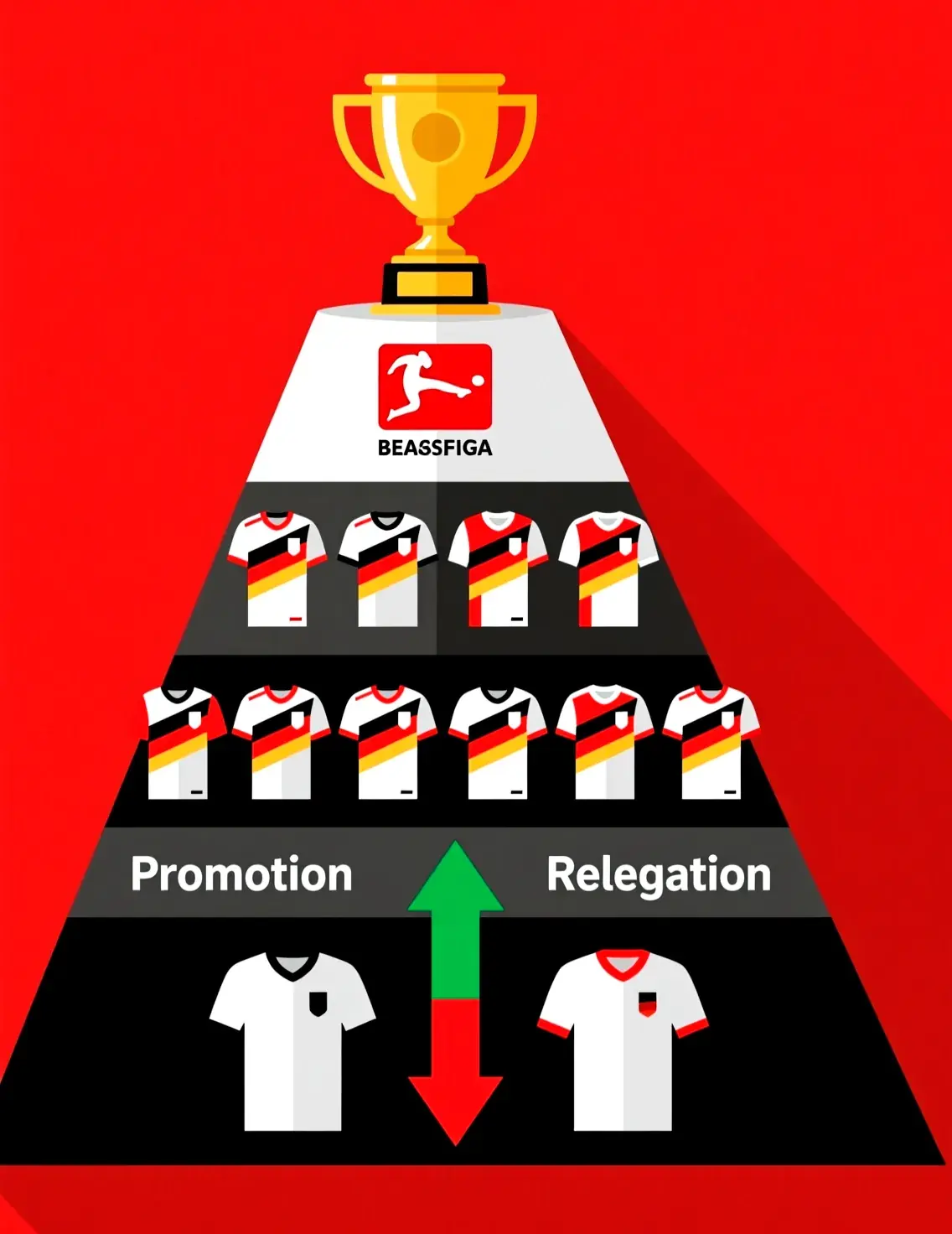
The Bundesliga operates on principles similar to other European football leagues but with specific characteristics that impact betting strategies. Understanding how the competition actually works—beyond just knowing it’s German football—provides crucial context for making informed betting decisions.
Eighteen teams compete in the Bundesliga each season, playing from mid-August through mid-May with a winter break in December and January. This schedule differs from the Premier League which plays through the holidays without pause. That winter break genuinely impacts form and results because teams return with varying fitness levels, new signings integrated during the January transfer window, and sometimes different tactical approaches after the extended break.
The format is double round-robin: each team plays every other team twice, once at home and once away, creating 34 matchdays total. This means 306 matches across a Bundesliga season, providing extensive betting opportunities. Nine matches occur most weekends—Saturday afternoon and evening plus a Sunday game—with occasional Friday fixtures for television scheduling.
Understanding the points system is fundamental because it determines how teams compete: three points for a win, one point for a draw, zero points for a loss. Goal difference serves as the primary tiebreaker when teams finish level on points—total goals scored minus total goals conceded across the season. This tiebreaker system matters for betting because teams needing goals for goal difference often play more attacking football, creating over betting opportunities.
The season concludes with promotion and relegation that reshapes the competition annually. The bottom two teams (positions 17 and 18) drop directly to 2. Bundesliga, replaced by that division’s top two finishers. The team finishing 16th enters a relegation playoff against the 2. Bundesliga’s third-place team—a two-legged tie where away goals no longer apply, meaning extra time and penalties if necessary. These playoff matches create high-pressure betting opportunities with predictable patterns about how desperate teams approach must-win scenarios.
Bayern Munich has dominated German football for over a decade, winning eleven consecutive titles from 2013-2023 before Bayer Leverkusen’s surprise championship in 2023/24. This dominance creates specific betting considerations. Bayern’s matches against lower-table opposition often produce short odds that offer minimal value despite high win probability. However, Bayern’s attacking style creates opportunities in goals markets, and their occasional slip-ups against mid-table opponents—when the market has overreacted to recent form—can provide excellent value.
The chasing pack typically includes Borussia Dortmund, RB Leipzig, and Bayer Leverkusen, with teams like Eintracht Frankfurt, Bayer 04 Leverkusen, and occasionally surprising challengers competing for European places. Matches between these challengers often provide better value than Bayern fixtures because odds better reflect actual uncertainty about outcomes.
What makes the Bundesliga particularly interesting for betting is its attacking football philosophy. The league consistently ranks among Europe’s highest-scoring competitions, creating favorable conditions for over/under and both teams to score markets. This attacking style is cultural rather than coincidental—German football emphasizes offensive play, pressing, and transitions. Teams across all table positions commit numbers forward rather than playing cautiously, producing goals at both ends.
Home advantage exists strongly in the Bundesliga, perhaps more so than in leagues where television money has reduced the gap between home and away performances. German clubs maintain passionate supporter bases that create genuine intimidation for visiting teams. The famous “Yellow Wall” at Dortmund’s Westfalenstadion, Bayern’s Allianz Arena atmosphere, and even smaller clubs’ dedicated fanbases contribute to home teams winning approximately 46% of matches compared to 26% away wins and 28% draws—figures that create bankable betting patterns when properly understood.
How to Place Your First Bundesliga Bet
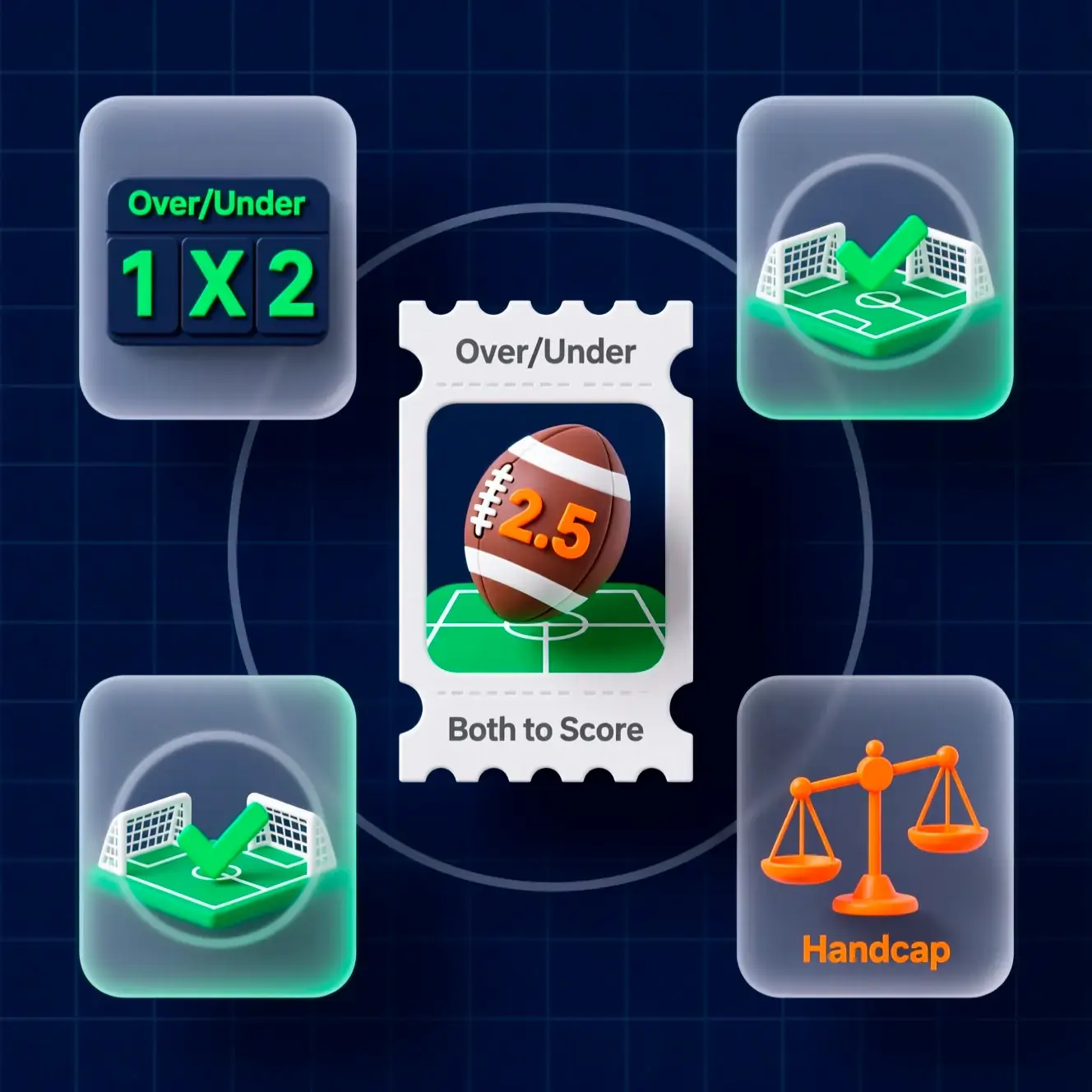
Placing your first bet feels more complicated than it actually is once you understand the basic process. Bookmaker websites look overwhelming with dozens of markets and options, but the fundamental mechanics are straightforward. Let’s walk through placing a simple match result bet on a Bundesliga game step by step.
First, log into your bookmaker account and navigate to the football section. Most sites organize by competition, so find “Germany” or “Bundesliga” in the menu. You’ll see a list of upcoming matches with three numbers next to each game—these are the odds for Home Win, Draw, and Away Win respectively. For example, if you see “Borussia Dortmund vs. Stuttgart: 1.65 / 4.20 / 5.00,” those numbers represent the decimal odds for Dortmund winning, the match ending in a draw, or Stuttgart winning.
Understanding decimal odds is crucial because they tell you exactly how much you’ll receive (including your original stake) if your bet wins. An odds of 1.65 means a 10-pound bet returns 16.50 pounds total—your 10-pound stake plus 6.50 pounds profit. Higher odds mean lower probability but bigger potential returns. The 5.00 odds for Stuttgart winning means a 10-pound bet would return 50 pounds if Stuttgart pulls off the upset.
To place the bet, click on your chosen outcome—let’s say Dortmund to win at 1.65 odds. This adds the selection to your betting slip, usually displayed on the right side of the screen or in a pop-up on mobile. Enter your stake amount in the box provided. The betting slip automatically calculates your potential returns before you confirm. Review everything carefully: the match, your selection, the odds, and the stake amount.
When you’re satisfied everything is correct, click “Place Bet” or whatever confirmation button your bookmaker uses. You’ll receive immediate confirmation that your bet is placed, and the stake amount deducts from your account balance. That’s it—you’ve placed your first Bundesliga bet. Now you wait for the match to finish and see if your selection wins.
The same basic process works for any bet type, though more complex markets require understanding what you’re actually betting on. Before placing bets on Asian handicaps or correct scores, make sure you genuinely understand how those markets work rather than just clicking buttons and hoping for the best.
Beginner-Friendly Bundesliga Betting Markets
Not all betting markets are equally suitable for beginners. Some require extensive knowledge about teams, players, and tactical nuances that you haven’t developed yet. Others involve so much variance that even expert analysis produces mostly random outcomes. Start with markets that reward basic research and understanding rather than requiring advanced expertise or depending heavily on luck.
Match Result (1X2)
This is the most straightforward betting market: picking which team wins or whether the match ends in a draw. Despite its simplicity, match result betting rewards proper research about team form, head-to-head records, and home advantage. The odds generally reflect the actual probabilities reasonably accurately, but careful analysis can identify spots where bookmakers have mispriced matches based on recent results or public perception.
Match result betting works well for beginners because the outcome is unambiguous—there’s no subjective interpretation about whether your bet won or lost. Either your selected team won, the match drew, or your team lost. This clarity helps you evaluate your betting decisions: did you make reasonable assessments that got unlucky, or were your analyses flawed from the start?
Over/Under Goals
This market asks whether total goals scored by both teams will exceed or fall short of a specified number—most commonly 2.5 goals. Betting “over 2.5 goals” wins if the match finishes with 3+ total goals regardless of which team scores them. “Under 2.5 goals” wins with 0-2 total goals.
The Bundesliga’s high-scoring nature makes over/under goals particularly appealing for beginners because you’re betting with historical trends rather than against them. German teams attack aggressively, creating goals at higher rates than most European leagues. This doesn’t mean blindly betting overs, but it does mean the over option often provides decent value compared to defensive leagues where goals are scarce.
Analyzing over/under requires examining both teams’ recent scoring patterns—goals scored and conceded in recent matches—and considering factors like weather, injuries to key defenders, and whether either team desperately needs goals for league position. A match between two mid-table teams with weak defenses might see odds of 1.70 for over 2.5 goals despite that outcome being quite likely based on their scoring histories.
Both Teams to Score (BTTS)
This market is exactly what it sounds like: betting on whether both teams will score at least one goal each during the match. A 2-1 result means “Yes” wins regardless of which team scored two. A 3-0 result means “No” wins because only one team scored.
BTTS works wonderfully in the Bundesliga because the attacking football philosophy means even weaker teams typically create chances and score goals. Unlike more defensive leagues where strong teams regularly win 1-0 or 2-0, Bundesliga matches frequently see both teams getting on the scoresheet even when one side dominates overall.
Research BTTS by checking whether teams regularly score and concede goals. A team that has scored in 8 of their last 10 matches and conceded in 7 of those games creates obvious BTTS potential when facing similarly open opposition. Avoid BTTS bets in matches involving extremely defensive teams or where one side is vastly superior and likely to dominate possession without conceding.
Basic Bundesliga Betting Strategies

Strategy separates random gambling from thoughtful betting that can produce consistent profits over time. These aren’t get-rich-quick schemes or guaranteed winning systems—those don’t exist in sports betting. Instead, these are frameworks for making informed decisions that shift probabilities slightly in your favor, which over hundreds of bets creates meaningful advantages.
Exploit home advantage systematically
Bundesliga home teams win roughly 46% of matches compared to 26% for away teams—a significant edge that bookmakers account for but sometimes undervalue in specific situations. Rather than randomly backing home teams, identify clubs with particularly strong home records and particularly weak away records among their opponents.
For example, a mid-table team that has won 7 of 10 home matches hosting a top-six team that has lost 6 of 11 away matches creates an interesting spot. The bookmaker’s odds might still favor the higher-ranked team based on overall quality, but the situational factors—specific home/away splits rather than general team strength—could make the home underdog worth backing.
Track each team’s specific home-away split rather than assuming league-wide averages apply uniformly. Some clubs show massive home advantages while others perform similarly regardless of venue. Building this knowledge gradually through observation helps you identify which home teams deserve backing versus those where home advantage is overrated by bookmakers.
Target over 2.5 goals in specific matchups
Rather than blindly backing overs because “Bundesliga has goals,” identify specific situations where high-scoring potential exceeds market expectations. Matches between teams ranked 6th-14th with weak defenses create perfect over conditions because both sides attack without the defensive organization top teams maintain.
Check recent head-to-head meetings—if the last four encounters between two teams all produced 3+ goals, that pattern likely continues absent major tactical changes. Similarly, matches where both teams need wins desperately (for European qualification or relegation survival) often become open affairs producing more goals than normal circumstances.
Avoid betting Bayern Munich at short odds
This feels counterintuitive because Bayern wins most matches, making them seem like safe bets. But odds of -400 or worse (1.25 decimal) require 80%+ accuracy to profit long-term. Bayern wins maybe 75% of their matches, meaning backing them at typical odds slowly loses money despite them winning more often than not. The odds reflect their dominance so thoroughly that value rarely exists.
Instead, explore alternative Bayern markets: over/under goals (Bayern matches produce goals reliably), Asian handicaps where they must win by multiple goals, or simply skip Bayern matches entirely and focus on the other eight weekly fixtures where value opportunities appear more frequently.
Start with single bets rather than accumulators
Accumulator bets—combining multiple selections into one wager with multiplied odds—appeal to beginners chasing big returns from small stakes. Bookmakers promote them heavily because accumulators are systematically profitable for the house when bettors construct them poorly. Resist the temptation initially.
Single bets let you evaluate each selection independently and learn which analytical approaches actually predict outcomes versus those that just sound clever. Once you’ve demonstrated ability to pick winners consistently through single bets, then consider carefully structured accumulators. But starting with parlays before you’ve proven individual bet selection skills is the betting equivalent of trying to run before you can walk.
Keep detailed records
Track every bet in a simple spreadsheet: date, match, selection, odds, stake, result, and profit/loss. Over time, this data reveals patterns about which bet types you handle well versus those where you’re consistently losing money. Maybe your match result bets show modest profits while your over/under record is disastrous—valuable information that guides where to focus attention versus what to avoid.
Understand how expected goals help.
Managing Your Bundesliga Betting Bankroll
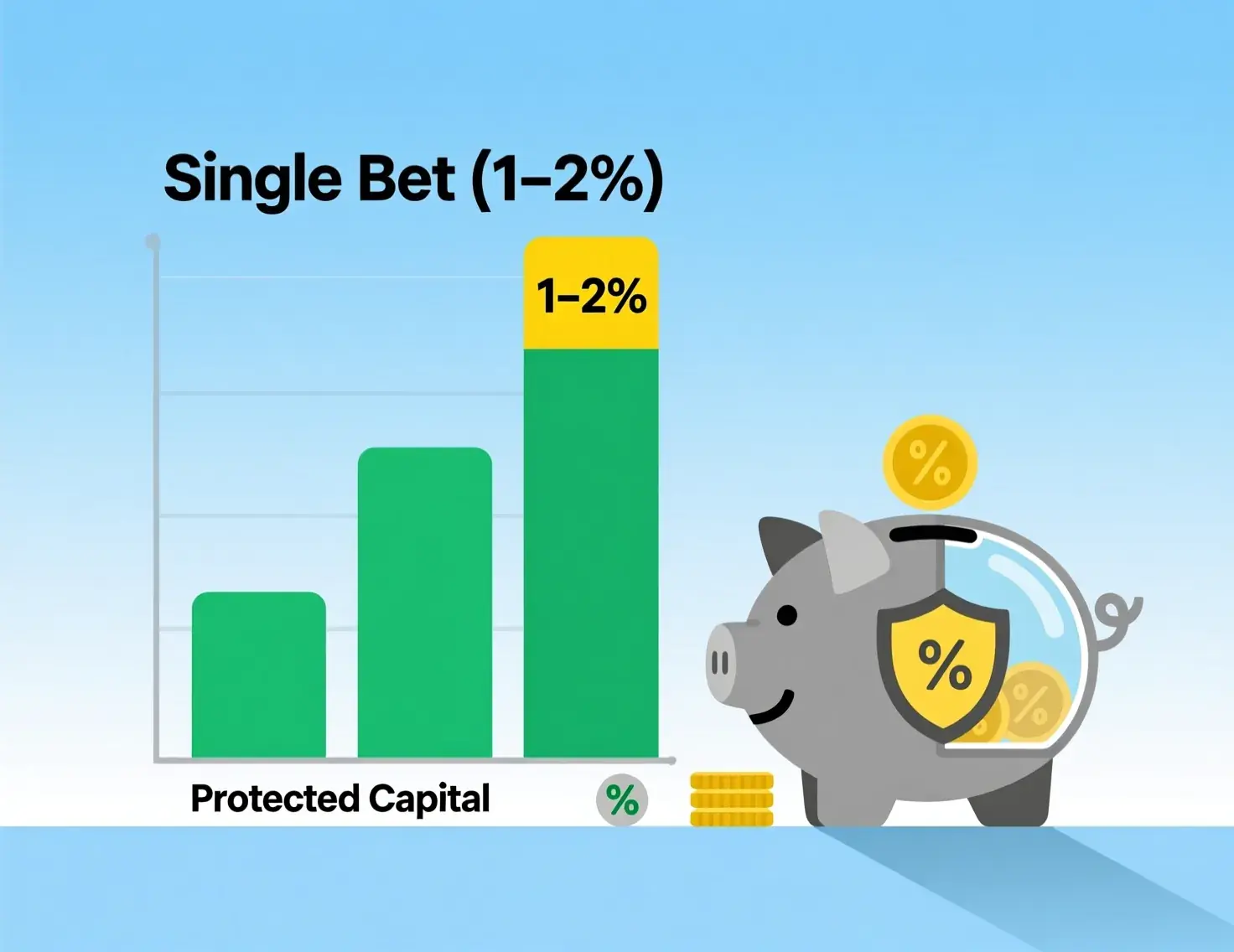
Bankroll management separates recreational gambling from sustainable betting practices that survive inevitable losing runs without destroying your ability to continue. Even strong strategies experience variance—periods where correct analysis produces unlucky results—and proper bankroll management protects you through these rough patches.
Start with a dedicated betting bankroll
Treat your betting funds as completely separate from your everyday finances. This should be money you can afford to lose without impacting your ability to pay rent, buy groceries, or handle unexpected expenses. If losing your betting bankroll would create genuine financial problems, you’re betting with money you shouldn’t risk.
A reasonable starting bankroll for Bundesliga betting might be 200-500 pounds or equivalent in your currency—enough to place meaningful bets over several months while learning, but not so much that inevitable early losses create stress. You’re paying tuition to learn profitable betting; having adequate bankroll prevents that education from costing more than necessary.
Never risk more than 1-2% per bet
The cardinal rule of bankroll management: individual bets should represent small percentages of your total bankroll, typically 1-2%. With a 300-pound bankroll, this means stakes of 3-6 pounds per bet. This conservative approach ensures that even extended losing streaks—which absolutely will happen—don’t devastate your ability to continue betting.
I’ve watched too many beginners start with 200 pounds, place four 50-pound bets trying to win big quickly, lose all four, and find themselves completely out of money before they’ve learned anything useful. Protecting your bankroll through small stakes relative to total funds is the single most important habit for long-term betting success.
Accept that losing runs happen
Even with perfect analysis, variance guarantees stretches where you lose more bets than probability suggests you should. A strategy that wins 55% long-term might hit only 40% over any 20-bet sample. This is normal statistical variation, not evidence your approach doesn’t work. Proper bankroll management keeps you in the game during these inevitable rough patches until regression toward your actual winning percentage occurs.
The psychological challenge comes in trusting your process during losing runs rather than panicking and either abandoning working strategies or increasing stakes desperately trying to “win it back.” Discipline during variance separates successful bettors from those who blow up their bankrolls then quit, blaming bad luck rather than recognizing their bankroll management was inadequate from the start.
How to Start Betting on Bundesliga Matches with More Confidence
Starting your Bundesliga betting journey doesn’t require expert-level knowledge or years of German football experience. The fundamentals outlined here—understanding league structure, placing bets correctly, focusing on beginner-friendly markets, applying basic strategies, and managing your bankroll properly—provide everything needed for competent betting while you develop deeper expertise.
Remember that profitable betting is a marathon rather than a sprint. You won’t become an expert overnight, and early losses are tuition payments for education that pays dividends later. Focus on process over results initially—making well-reasoned bets based on research rather than impulse, regardless of whether those bets win or lose in the short term.
As you gain experience, gradually expand into more complex markets and sophisticated strategies covered in our other Bundesliga betting guides. But master these foundations first because everything else builds on them.
Rely on cold statistics at bundesliga bet.
