
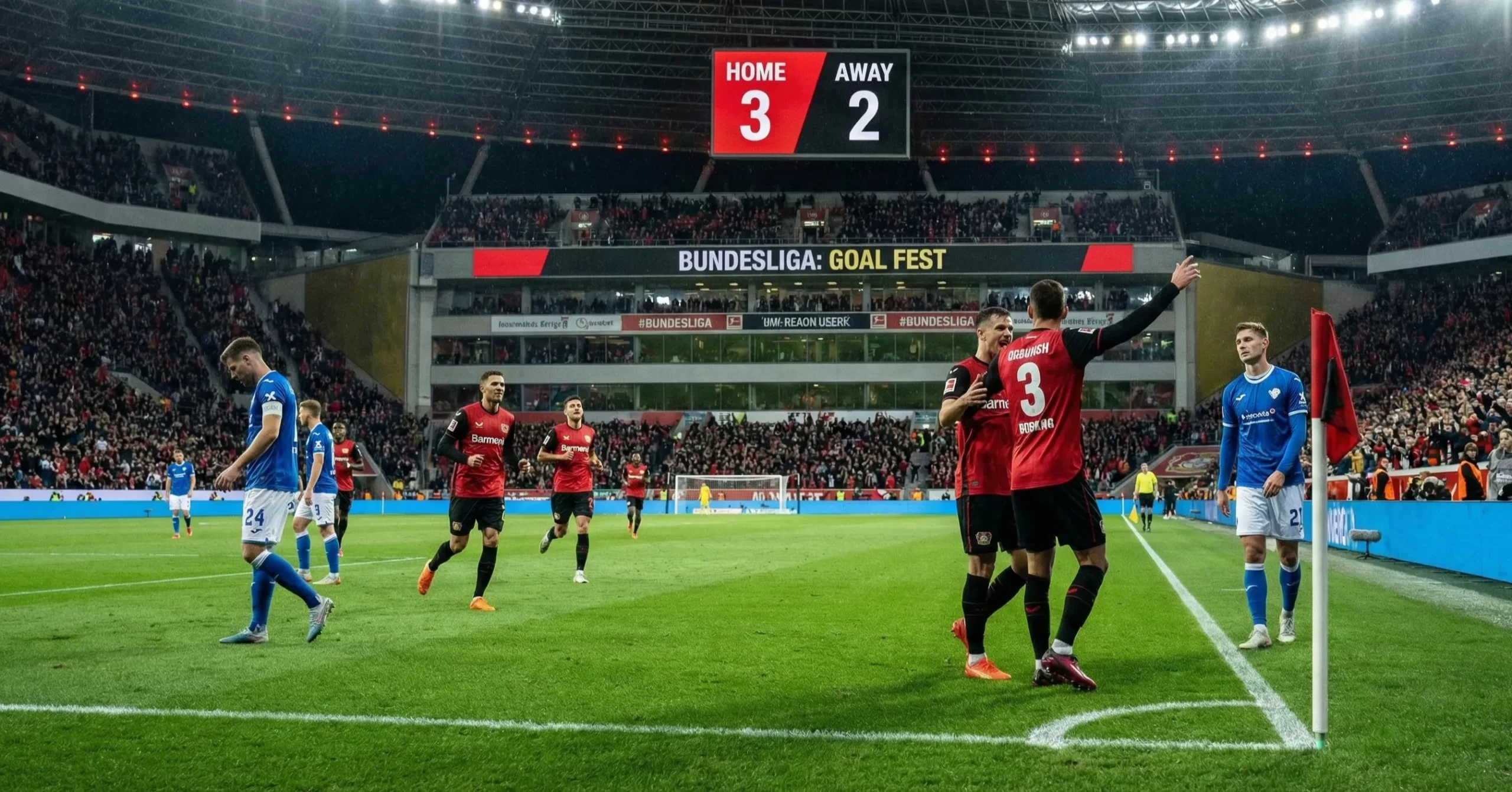
The Bundesliga produces mutual scoring in approximately 57-61% of matches across recent seasons — a rate that consistently exceeds other major European leagues and creates systematic betting opportunities for those who understand the structural factors driving this pattern. Both Teams to Score betting in German football isn’t speculative gambling on chaotic outcomes; it’s methodical exploitation of tactical tendencies, attacking philosophies, and competitive dynamics that reliably produce goals at both ends regardless of specific match outcomes.
This elevated BTTS rate doesn’t represent random variance that regression will correct. It emerges from German football’s philosophical commitment to attacking play, from tactical approaches that prioritize offensive production over defensive pragmatism, and from competitive structures that discourage the low-scoring defensive battles common in other leagues. Understanding why BTTS works in Germany — not just that it works — transforms market selection from pattern-matching into genuine analytical edge.
The Structural Foundations of German Scoring
German football culture emphasizes attacking entertainment to degrees that Italian or English traditions don’t replicate. Supporters expect their clubs to score goals regardless of opposition quality, and managers who prioritize defensive solidity over attacking ambition face criticism that their counterparts in more pragmatic footballing cultures might avoid. This cultural expectation shapes tactical approaches, player recruitment, and match-by-match decision-making in ways that produce goals.
The league’s competitive structure amplifies attacking tendencies. Beyond Bayern’s financial dominance, the remaining seventeen clubs operate within relatively compressed resource ranges that prevent truly elite defensive units from forming. When no team can assemble the personnel for genuine defensive impenetrability, matches between non-Bayern opponents produce mutual vulnerability that both sides exploit. The quality gap between best and worst defenses in the Bundesliga remains smaller than in leagues where financial stratification creates unbridgeable talent concentrations.
Tactical trends throughout German football favor attacking approaches. Pressing intensity requires committing players forward, creating transitional vulnerability that opponents exploit through counter-attacks. Possession-oriented buildup stretches defensive shapes, creating gaps that quality finishing converts. Even clubs fighting relegation typically attempt to score their way to safety rather than defending their way to draws, producing attacking approaches across the entire table that generate the mutual scoring BTTS requires.
The average Bundesliga match produces over three goals — substantially higher than Serie A or Ligue 1 averages and exceeding the Premier League’s already-elevated totals. This goal volume creates the statistical foundation that makes BTTS viable as a systematic betting approach rather than speculative proposition betting.
Team-Level BTTS Patterns

Individual club characteristics create predictable BTTS rate variations that selective betting can exploit. Teams with attacking quality but defensive vulnerability produce BTTS rates approaching 70-75% of their fixtures — backing BTTS Yes in their matches offers consistent value when odds reflect league averages rather than team-specific tendencies.
Hoffenheim historically exemplifies the high-BTTS profile through attacking talent that scores reliably combined with defensive organization that concedes consistently. Their matches produce mutual scoring at rates substantially exceeding league averages, making them prime targets for BTTS Yes backing regardless of opponent. Similar profiles apply to clubs prioritizing attacking entertainment — identifying which teams currently occupy this profile requires tracking early-season patterns and adjusting selections as form develops.
Conversely, some clubs suppress BTTS rates through either defensive excellence or attacking limitation. Bayern’s defensive solidity produces clean sheets at rates that reduce BTTS probability despite their overwhelming attacking production. Meanwhile, promoted sides or relegation candidates sometimes lack the attacking quality to score regardless of opponent vulnerability, suppressing BTTS from the opposite direction.
The practical application involves maintaining team-level BTTS tracking throughout seasons. Which clubs consistently produce mutual scoring? Which suppress it through defensive or attacking profiles? Adjusting BTTS selections based on this team-specific data rather than applying league-wide assumptions creates edge that generic approaches miss.
Matchup Analysis for BTTS Selection
The interaction between two team profiles determines BTTS probability more accurately than either team’s individual rate. When two high-BTTS-rate clubs meet, probability compounds upward beyond either individual rate. When a high-BTTS team faces a low-BTTS opponent, the interaction produces moderate probability that neither extreme rate fully predicts.
Ideal BTTS backing targets matches between teams that both attack and both defend vulnerably — the combination that maximizes mutual scoring probability. These matchups often occur in mid-table encounters where neither side possesses elite defensive quality but both carry attacking threat sufficient to score against imperfect organization. Matches between 6th and 14th place clubs frequently produce optimal BTTS conditions that bookmaker odds don’t fully reflect.
Problematic BTTS matchups involve either defensive excellence on one side or attacking inadequacy that prevents scoring regardless of opponent vulnerability. Bayern home matches sometimes fall into the defensive excellence category — their organization limits opponent scoring despite the Bundesliga’s general attacking tendencies. Promoted team away matches sometimes fall into attacking inadequacy — their quality proves insufficient to score even against middling defenses.
Avoiding these problematic matchups matters as much as identifying favorable ones. The strike rate differential between selective BTTS betting and blanket league-wide application justifies the patience required to wait for optimal matchups rather than backing every fixture because “the Bundesliga scores lots of goals.”
Odds Assessment and Value Identification
BTTS betting profitability depends on obtaining odds that exceed true probability rather than simply backing markets that hit frequently. A 60% BTTS rate requires odds above -150 (1.67 decimal) for long-term profitability — if bookmakers price BTTS Yes below this threshold, even accurate selection produces negative expected value.
Bundesliga BTTS odds typically range from -140 to +100 depending on matchup perception. When bookmakers underestimate BTTS probability in specific matchups — perhaps due to recent clean sheet results that represent variance rather than genuine defensive improvement — value opportunities emerge. Conversely, when odds compress below value thresholds because casual bettors pile into obviously attacking matchups, the edge disappears regardless of expected outcome.
The practical approach involves calculating implied probability from available odds and comparing against your assessed true probability. If available odds imply 55% probability but your matchup analysis suggests 65% true probability, value exists worth exploiting. If implied probability already exceeds your assessment, passing on the bet regardless of expected outcome preserves bankroll for genuinely valuable opportunities.
Line shopping across multiple bookmakers proves essential for BTTS betting given compressed margins. The difference between -130 and -145 odds might seem trivial per bet, but across a season of consistent BTTS betting, that margin differential accumulates into substantial bankroll impact. Maintaining accounts at multiple sportsbooks and checking comparison sites before every selection represents fundamental best practice.
BTTS Variant Markets
Standard BTTS Yes betting represents only one approach to mutual scoring markets. Variant markets — BTTS and Over 2.5, BTTS and specific team win, BTTS and draw — offer different risk-reward profiles that sometimes provide superior value for specific matchup assessments.
BTTS and Over 2.5 goals combines two correlated but not identical propositions. Matches can hit BTTS through 1-1 draws that miss Over 2.5, and matches can hit Over 2.5 through 3-0 results that miss BTTS. The combination market offers enhanced odds that compensate for reduced strike rate, making it viable when analysis strongly supports high-scoring open matches rather than lower-scoring mutual vulnerability.
BTTS and Win markets — backing both teams to score with a specific winner — offer substantial odds enhancement for matchups where one side should win despite conceding. Frankfurt matches frequently suit this approach given their attacking quality and defensive vulnerability — they score and concede regularly but often win despite the mutual scoring. Identifying teams whose BTTS patterns combine with winning tendencies creates value in these enhanced markets.
BTTS and Draw warrants consideration in specifically balanced matchups between clubs of similar quality and similar attacking/defensive profiles. When analysis suggests genuinely even matches where both teams should score but neither should dominate, the draw outcome becomes viable alongside BTTS backing. The combined market offers odds that standard BTTS Yes doesn’t provide.
Check massive fixture congestion impacts.
Building Your BTTS Betting System

Systematic BTTS betting requires structured record-keeping that enables evidence-based refinement over time. Track not just bet outcomes but the specific factors driving selections — team profiles, matchup assessments, odds obtained, and post-match analysis of whether results matched process predictions. This data enables pattern identification that intuition-based betting cannot replicate.
Staking approach should reflect BTTS betting’s relatively high strike rate through consistent position sizing rather than aggressive pursuit of individual opportunities. The 55-65% strike rate typical of selective BTTS betting tolerates less variance than longer-odds propositions, but still requires bankroll protection against inevitable losing streaks.
Seasonal rhythm affects BTTS patterns in ways worth incorporating. Early-season matches often produce lower BTTS rates as teams’ attacking combinations aren’t yet optimized and defensive organization sometimes exceeds sustainable levels. Mid-season fixture congestion creates physical fatigue that sometimes suppresses scoring. Late-season motivational variations produce match-specific dynamics that individual assessment must capture.
The Bundesliga will continue producing goals at rates that create BTTS betting opportunity for informed bettors. The structural factors driving German football’s attacking emphasis aren’t temporary trends — they represent deep cultural and competitive realities that ensure elevated mutual scoring regardless of specific seasonal variations. Building expertise in this specific market area, developing team-level tracking systems, and maintaining discipline in matchup selection transforms BTTS betting from recreational entertainment into systematic edge exploitation.
The goals will keep coming in German football. Whether you profit from them depends on understanding why they come, which matchups maximize probability, and which odds represent genuine value rather than popular perception that bookmakers have already priced appropriately.
Discover awesome betting options available at bundesliga bet.
