
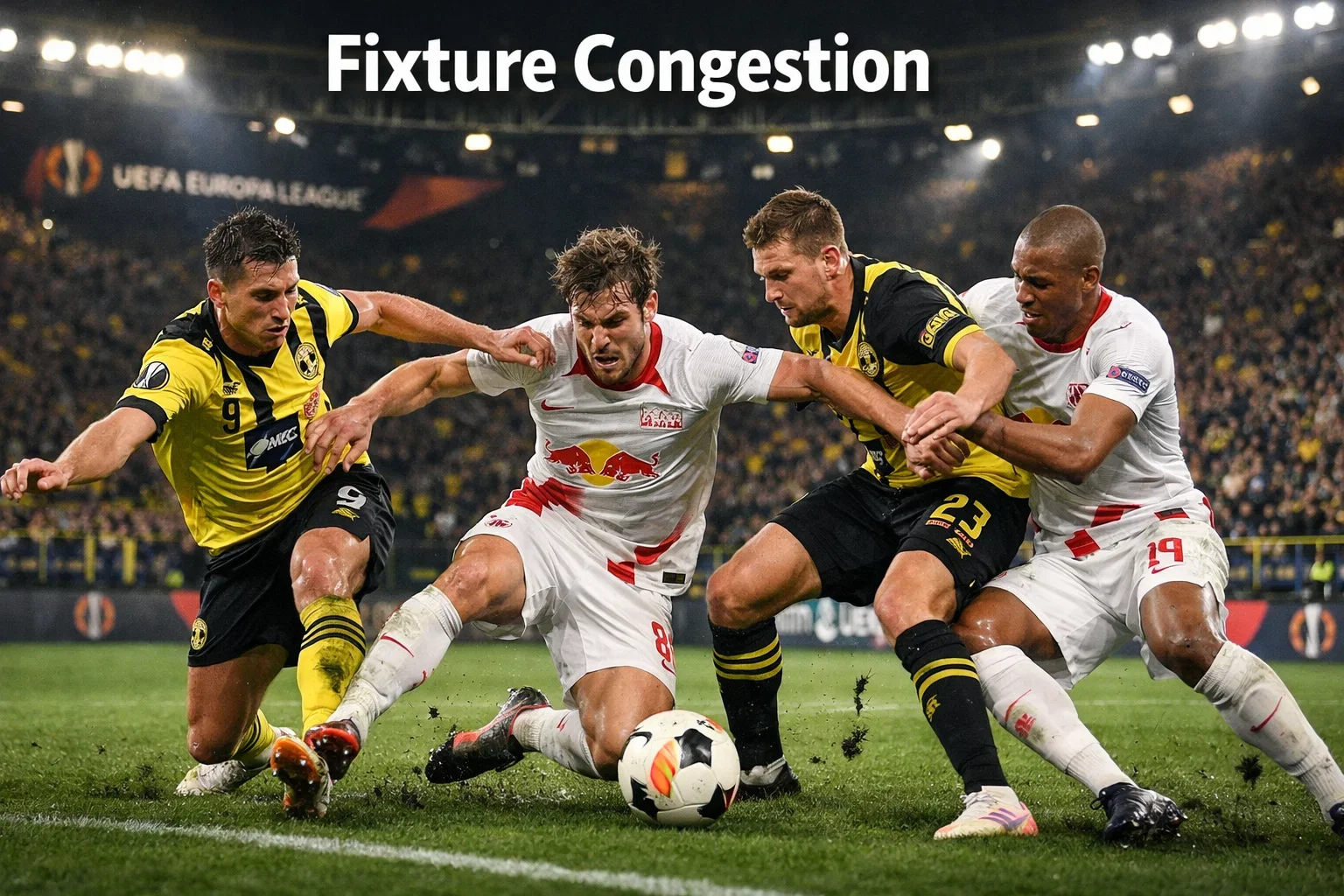
The modern football calendar demands that elite clubs compete on multiple fronts simultaneously, creating fixture congestion that fundamentally alters how teams perform week to week. For Bundesliga clubs competing in the Champions League, Europa League, or Conference League, the midweek-weekend rhythm introduces variables that careful bettors can exploit. Understanding exactly how European campaigns affect domestic performance separates profitable betting approaches from recreational guesswork.
The 2024/25 Champions League format expansion to 36 teams with eight league-phase matches per club intensified scheduling pressures across European football. German clubs now face an even more demanding continental calendar, with the Bundesliga typically providing four or five Champions League participants plus additional Europa League and Conference League representatives. This creates a two-tier system within the domestic league where some clubs play significantly more matches than others across the same calendar period.
Research spanning two decades of European football reveals a nuanced picture regarding fixture congestion effects. Contrary to widespread assumption, elite clubs generally maintain their performance levels despite compressed schedules, with Champions League teams historically outperforming their domestic opponents even when playing with reduced recovery time. The explanation lies in squad depth and resource advantages that allow top clubs to rotate effectively while maintaining competitive starting elevens. However, the patterns differ meaningfully across competitive levels and specific situational contexts.
The Squad Depth Factor
Bayern Munich enter most seasons with genuinely two-deep roster quality at nearly every position, allowing midweek rotation without significant drop-off in weekend performance. When Bayern face Tuesday Champions League fixtures followed by Saturday Bundesliga matches, their adjusted lineup typically represents perhaps 80-85% of maximum strength rather than the dramatic degradation smaller clubs experience. Betting markets generally price Bayern appropriately for this rotation capacity, meaning value often lies elsewhere in congestion situations.
Borussia Dortmund and RB Leipzig occupy the next tier of squad depth among regular European participants. These clubs can rotate meaningfully but typically lean more heavily on core players across competitions than Bayern can afford. The impact shows most clearly in specific positions where depth drops sharply, particularly center-back and central midfield roles that demand the highest physical output. When key players in these positions feature in both midweek European matches and weekend league fixtures, the second match of the sequence deserves scrutiny for potential performance decline.
The clubs stepping up to European competition for the first time or after extended absences present the most interesting betting considerations. When a team like VfB Stuttgart or Eintracht Frankfurt returns to Champions League football after seasons away, their squad construction rarely anticipates the demands of 50+ competitive matches. These newly elevated clubs frequently start seasons strongly before congestion effects accumulate, creating predictable mid-season form dips that betting markets may underestimate.
Promoted teams or typical mid-table sides reaching European qualification through cup runs face the most severe congestion challenges. Conference League or Europa League campaigns adding 6-12 matches to already full schedules strain resources that were built for 34-match Bundesliga seasons plus cup competitions. These clubs often show the clearest performance declines during congested periods, though markets have become more sophisticated at identifying these situations.
Travel and Recovery Dynamics
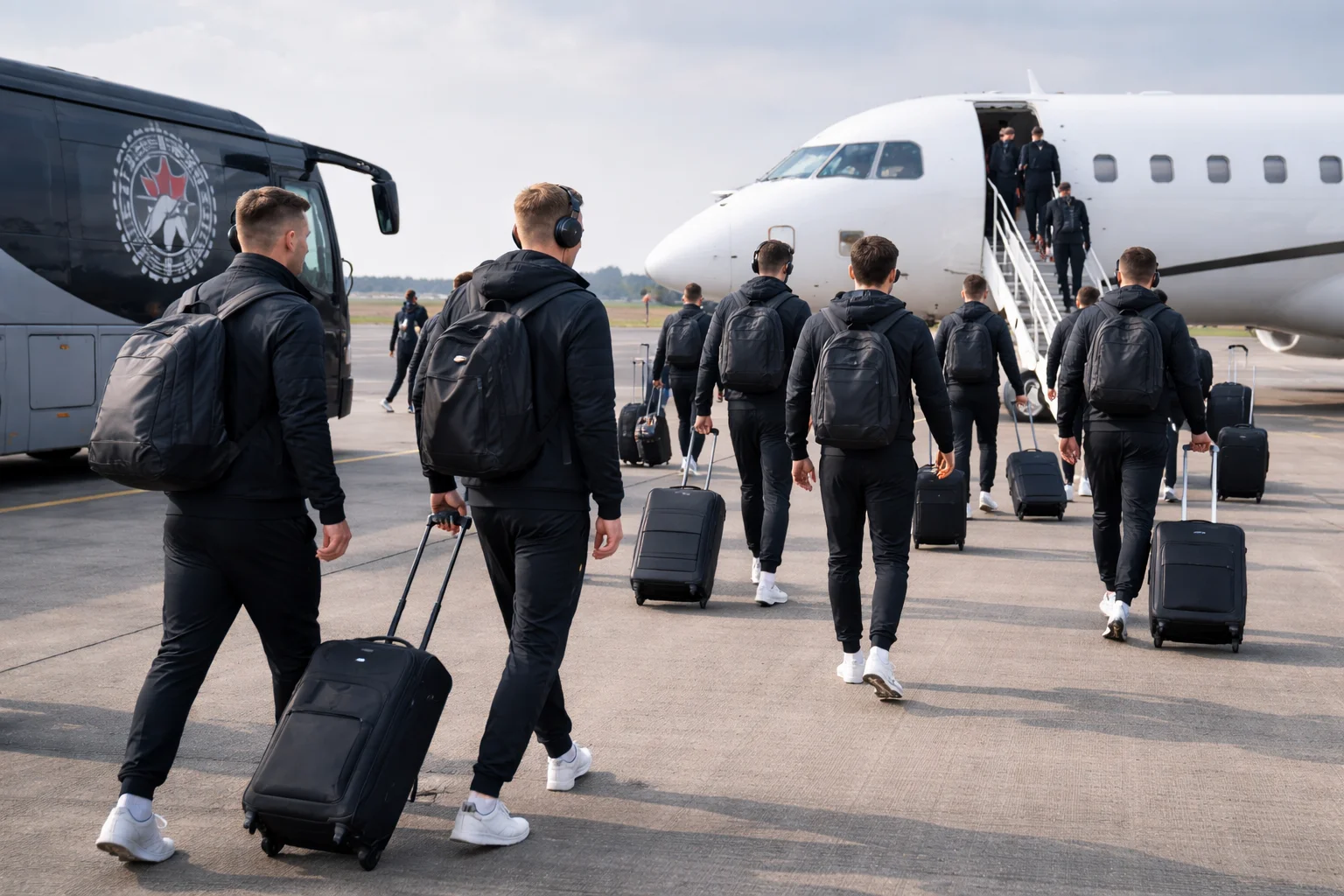
The geographical reality of European competition introduces fatigue factors beyond simple match accumulation. German clubs traveling to Ukraine, Turkey, Israel, or distant corners of Portugal face genuine recovery challenges that affect subsequent domestic performance. A Thursday night Conference League match in Kazakhstan followed by a Sunday Bundesliga fixture creates conditions where even well-resourced clubs struggle to prepare optimally.
The research data suggests that travel direction matters more than total distance in many cases. Eastward travel disrupting sleep patterns shows measurable effects on athletic performance, while westward movement typically causes less disruption. German clubs competing in Eastern European time zones before weekend Bundesliga matches may warrant slight adjustment in expected performance, particularly when the domestic opponent arrives well-rested from a free midweek.
Home-away sequencing within congested periods reveals exploitable patterns for attentive bettors. A club playing away in Europe followed by away in the Bundesliga faces compounded travel stress that accumulates across the double absence from home facilities. Conversely, teams returning to home venues after European away trips typically show slight performance upticks compared to baseline, perhaps reflecting the psychological boost of familiar surroundings after demanding travel.
The Bundesliga’s winter break traditionally provided European participants a crucial recovery window, but scheduling changes have compressed this relief period in recent seasons. Clubs advancing deep into European competitions increasingly face January and February without the recuperation time that previous generations enjoyed, creating late-season fatigue patterns that affect title races and relegation battles alike.
Market Behavior During Congested Periods
Bookmakers have access to sophisticated congestion-adjustment models that prevent obvious mispricings in most situations. The straightforward play of backing well-rested underdogs against European-fatigued favorites rarely offers consistent value because markets incorporate this information efficiently. Finding genuine edges requires identifying specific circumstances where standard adjustment models may fall short.
Squad rotation decisions represent information that arrives close to match time, creating brief value windows when starting lineups confirm unexpected choices. If a manager rests more key players than markets anticipated, or if expected rotation fails to materialize, prices may temporarily mispriced until liquidity corrects them. Monitoring team news closely during congested periods allows bettors to act before markets fully incorporate new information.
The accumulation of yellow cards across competitions creates suspension situations that markets may undervalue during congested stretches. European football operates on separate disciplinary tracking, but cumulative fatigue can increase card frequency across all competitions. When key players approach suspension thresholds in both domestic and European contexts simultaneously, their playing time becomes uncertain in ways that standard models may not fully capture.
Injury patterns during congested periods deserve careful attention. Muscle injuries particularly increase when players face compressed recovery windows, and the specific players most vulnerable to these issues can be identified through historical patterns. Backing against teams with injury-prone key players during demanding schedule stretches represents a systematic approach that exploits congestion effects indirectly.
Strategic Betting Approaches

The most reliable congestion-based betting strategy focuses on the cumulative effect across multiple match sequences rather than individual fixtures. A team facing three matches in eight days may perform adequately in the first and second matches before showing clear decline in the third. Targeting the final match of demanding sequences often produces better results than backing against European participants in their first post-continental fixture.
The Bundesliga calendar creates predictable congestion points that allow advance planning. The period immediately following international breaks typically features compressed scheduling as leagues catch up on postponed fixtures. Similarly, the weeks surrounding winter cup rounds and Champions League knockout phases generate fixture pile-ups that affect specific clubs. Mapping these pressure points at season’s start enables strategic bankroll allocation toward high-value windows.
Opposing European participants in specific Bundesliga contexts reveals clearer patterns than blanket approaches. Away matches following demanding European trips show the most consistent performance declines among fatigued clubs, while home fixtures see maintained performance in most cases. The combination of travel recovery and absence of home support appears to compound congestion effects more than either factor alone.
Considering opposition quality within congestion analysis adds another layer of useful discrimination. When European-fatigued clubs face well-drilled defensive opponents, the attacking sharpness required to break down organized structures may suffer more than when facing open, expansive sides. Similarly, defending against pressing teams demands physical intensity that congestion undermines more than containing passive opponents requires. Matching specific opponents to specific fatigue contexts refines betting approaches beyond simple European-participation flags.
Read about top scorer betting.
Bundesliga Fixture Congestion: How to Use Upcoming Schedule Pressure in Betting
The evolving European competition calendar promises ongoing changes to congestion dynamics in coming seasons. The expanded Champions League format generates more matches across the August-January period, while the Club World Cup expansion adds summer fixtures that affect pre-season preparation for participating clubs. Bettors who track these structural changes and anticipate their effects gain advantages over those relying on historical patterns that may no longer apply.
The Bundesliga’s commitment to maintaining the winter break provides German clubs with a potential advantage over Premier League and La Liga competitors who play through the holiday period. Whether this translates to better European knockout performance in February and March represents an ongoing question with betting implications. Tracking German club performance in continental competitions relative to expectations may reveal patterns worth exploiting in domestic contexts.
Technology and sports science continue advancing recovery protocols, potentially reducing congestion effects over time. Elite clubs invest heavily in sleep optimization, nutrition, and physical therapy that accelerates recovery between matches. As these advantages spread unevenly across the Bundesliga, the gap between well-resourced and under-resourced clubs in managing congestion may widen, creating new patterns for astute bettors to identify.
Double your overall monthly income at bundesliga bet.
