
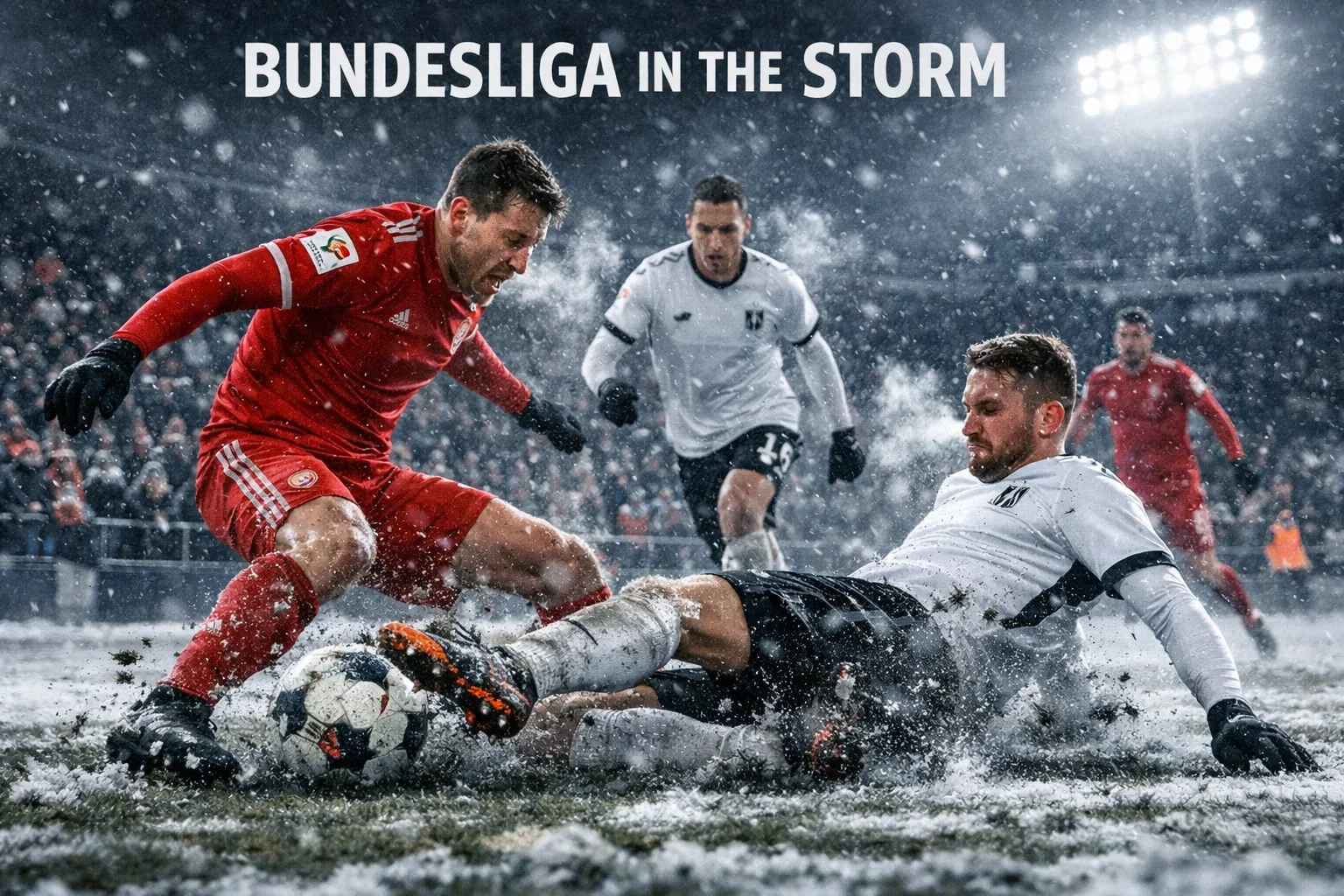
German football operates across a geographical range that produces genuinely variable weather conditions throughout the season. From the maritime influence affecting northern clubs like Bremen and Hamburg to the continental climate impacting Bavaria, the Bundesliga experiences meteorological diversity that other major leagues do not encounter. Whether these conditions create betting opportunities depends on understanding precisely how weather affects football performance and where markets may systematically misprice these effects.
The Bundesliga season runs from August through May, spanning summer heat, autumn rain, winter cold, and spring variability. Unlike the Premier League with its mild island climate or La Liga’s Mediterranean warmth, German football regularly encounters temperatures ranging from 35°C August kickoffs to sub-zero conditions in late autumn matches before the winter break. These temperature extremes affect player performance, tactical approaches, and match outcomes in measurable if modest ways.
The winter break itself represents the Bundesliga’s acknowledgment that German weather makes continuous football problematic. While the pause has shortened in recent years, it exists precisely because frozen pitches, heavy snowfall, and dangerous conditions would otherwise disrupt the schedule. The matches immediately before and after this break occur in the coldest conditions the season offers, creating specific situational contexts for weather-aware betting.
Temperature Effects on Match Outcomes
Research examining temperature effects on football performance produces mixed conclusions that should moderate betting enthusiasm. The widely circulated claim that cold conditions kill goals has weak statistical support when examined rigorously across large sample sizes. While individual matches in extreme conditions may produce unusual scorelines, the aggregate effect of temperature on goal totals appears modest at best.
What temperature does reliably affect is physical output and running distances. Studies tracking player movement show reduced high-intensity running in both extreme heat and severe cold, as bodies either conserve energy or struggle to maintain optimal muscle function. This suggests that weather effects might show more clearly in match tempo and territorial control rather than goal totals specifically. Teams built around high-pressing systems may struggle more in extreme conditions than counter-attacking sides who conserve energy between attacks.
The practical implication for Bundesliga betting focuses less on backing under goals in cold weather than on identifying teams whose style suits or clashes with specific conditions. A pressing-dependent side like RB Leipzig may find their approach compromised in heavy conditions where pitch surfaces or temperatures impair the constant movement their system demands. Conversely, physically robust teams comfortable in attritional contests may gain relative advantage when conditions favor strength over technique.
Heat effects during August and early September matches deserve consideration for clubs returning from pre-season preparation in different climates. German teams spending pre-season in warmer locations typically handle early-season heat well, while those preparing domestically may face adjustment periods. The first few matchweeks often feature the season’s highest temperatures, creating conditions where squad depth and rotation capacity matter more than later in the season.
Precipitation and Pitch Conditions
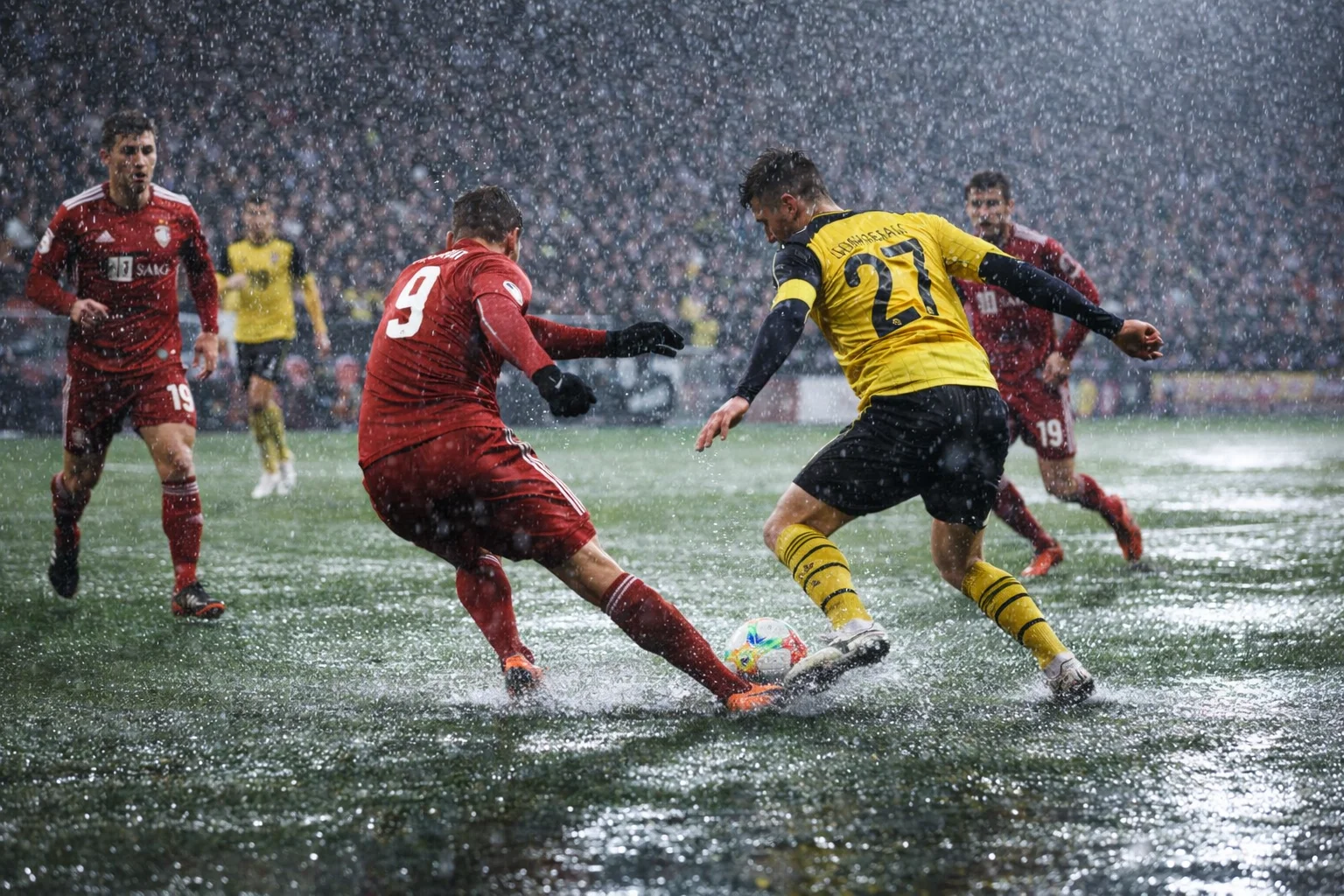
Rain affects Bundesliga matches more consistently than temperature extremes, though the effects remain more subtle than popular belief suggests. Wet pitches increase ball speed along the ground, potentially favoring teams who play quick passing football along the surface. However, the same conditions make control more difficult, potentially equalizing quality differences between technically superior and inferior sides.
Heavy rain during matches creates the most obvious situational factors. Standing water accumulates in pitch areas that drain poorly, creating unpredictable ball behavior that neither team can consistently exploit. The matches most affected by rain are those featuring significantly mismatched technical quality, where wet conditions may reduce the better team’s advantage more than they create opportunities for the weaker side.
Snow presents challenges that vary dramatically based on accumulation rate and pitch maintenance capacity. Light snow falling during matches typically produces entertaining football, as players adjust to slightly different ball behavior without losing control entirely. Heavy accumulation that forces play stoppages or threatens match abandonment creates unpredictable situations that markets struggle to price effectively. The betting implications lean toward avoiding positions rather than identifying specific value when severe snow threatens.
German stadium infrastructure has improved dramatically regarding pitch quality and drainage systems. The playing surfaces at most Bundesliga venues now handle significant rainfall without becoming unplayable, reducing weather effects compared to previous decades. However, pitch quality still varies across the league, with some smaller clubs maintaining less sophisticated drainage that allows water accumulation during sustained rainfall.
Wind as the Underrated Factor
Wind effects on football receive less attention than rain or cold but may produce more consistent match impacts. Strong winds demonstrably affect long balls, crosses, and goalkeeper distribution in ways that alter match dynamics meaningfully. Teams relying heavily on aerial play or long passing find their approach disrupted when wind conditions prevent accurate ball flight.
The geographical positioning of German stadiums creates variable wind exposure across the Bundesliga. Coastal-adjacent clubs like Bremen experience more consistent wind than inland Bavarian venues, potentially affecting home team adaptation to conditions. Visiting teams facing unfamiliar wind patterns may struggle with aspects of their game they take for granted in calmer home environments.
Directional wind effects create tactical asymmetries within individual matches. The traditional decision to play against the wind in the first half and with it in the second reflects sound tactical logic, as teams often increase their attacking urgency as matches progress. However, this consideration rarely receives direct betting market attention, potentially creating small inefficiencies for those tracking wind direction and strength at specific venues.
Exposed stadiums without complete roofing experience more significant wind effects than enclosed or semi-enclosed venues. When strong wind forecasts coincide with matches at exposed grounds, the conditions’ impact on play style deserves consideration regardless of which specific teams are involved. The technical quality that determines most match outcomes may matter less when environmental factors override normal patterns.
Practical Application for Bettors

Weather-based betting approaches require realistic expectations about edge magnitude. The effects documented in research typically range from slight to modest, meaning weather considerations should inform rather than drive betting decisions. Treating weather as a tiebreaker when other analysis produces unclear conclusions represents more appropriate application than building entire strategies around meteorological data.
The timing of weather assessment matters significantly for betting execution. Forecasts become more reliable closer to match time, but betting markets also adjust to incorporate weather information as it becomes available. The optimal approach involves monitoring forecasts early for strategic planning while confirming conditions closer to kickoff before final position-taking.
Combining weather analysis with other factors produces the most promising approach. When a team’s stylistic characteristics align poorly with forecast conditions, and other factors also point toward potential underperformance, the combined weight of evidence may justify stronger positions than weather alone would support. Similarly, teams whose approach suits difficult conditions may warrant consideration when facing opponents ill-equipped for the environment.
Live betting adjustments based on weather changes during matches offer opportunities that pre-match analysis cannot capture. When storms arrive mid-match or conditions change unexpectedly, markets must rapidly reprice situations they previously considered unlikely. The bettor watching matches who notices weather shifts before markets adjust fully may find brief value windows, though execution speed requirements make this challenging.
Regional and Seasonal Patterns
Northern German clubs experience more maritime-influenced weather patterns with milder winters but more consistent precipitation and wind. Hamburg, Bremen, and their geographic neighbors play in conditions that differ meaningfully from Bavarian or southwestern clubs. These regional differences create home advantage components related to weather adaptation that visiting teams must overcome.
The seasonal rhythm of German weather creates predictable challenge periods. October and November typically bring the most disruptive combination of cooling temperatures, increased rainfall, and wind as Atlantic weather systems dominate. Matches during this period may show greater weather effects than either summer or late-winter fixtures when conditions stabilize somewhat.
The post-winter-break period introduces frost and snow concerns that affect early January fixtures before temperatures moderate. German clubs returning from training camps in warmer climates face weather adjustment alongside match sharpness considerations during these first post-break matches. The combination of factors makes this period particularly challenging to price accurately for all involved.
Spring progression brings improving conditions but also pitch deterioration at venues that have absorbed a full season of use. The playing surfaces in March and April may not perform like the pristine September pitches despite warmer temperatures and less precipitation. This pitch quality decline affects technical teams more than physical sides, creating late-season patterns worth considering alongside weather factors.
The accumulated evidence suggests weather affects Bundesliga outcomes in real but limited ways that sophisticated markets largely incorporate. Finding genuine edges requires combining weather awareness with deeper analysis rather than treating meteorological data as standalone value sources. The bettor who integrates weather into comprehensive match assessment gains small but meaningful advantages over those ignoring conditions entirely, while avoiding the trap of overweighting factors that research shows produce modest effects.
