
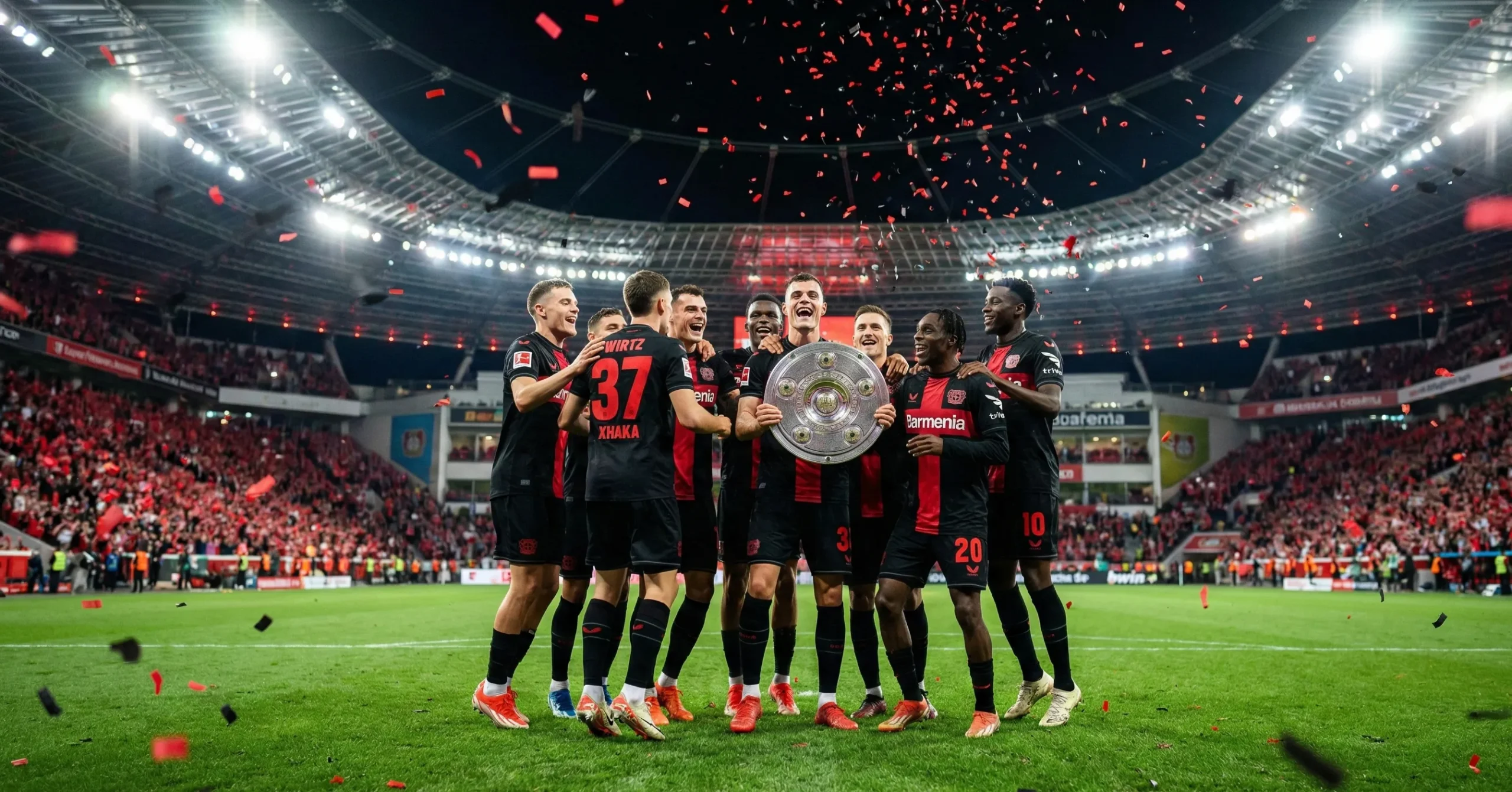
Bayer Leverkusen’s historic 2023-24 unbeaten Bundesliga campaign fundamentally altered how bookmakers and bettors perceive them, creating market dynamics that differ substantially from previous seasons when they embodied “Neverkusen” — a club perpetually close to glory but ultimately falling short. That reputation dissolved through 28 wins and 6 draws across 34 matches, establishing Leverkusen as genuine championship contenders rather than eternal bridesmaids. Understanding how to bet on this transformed club requires analyzing both their evolved tactical identity and the market inefficiencies their new status creates.
The BayArena in Leverkusen creates distinctive home-field dynamics that differ from traditional German football atmospheres. Smaller capacity than the Dortmund or Munich cathedrals produces more intimate settings where crowd intensity concentrates rather than disperses. Leverkusen’s home performances historically exceed baseline quality expectations, though the specific mechanisms involve tactical setup differences rather than pure atmospheric advantage. Smart betting on Leverkusen matches considers how venue affects their approach and opponent responses.
The Attacking Philosophy and Its Betting Implications
Leverkusen under recent coaching has embraced attacking football that prioritizes chance creation and goal-scoring over defensive pragmatism. They commit numbers forward in attacking sequences, press aggressively when losing possession, and accept defensive risk as necessary cost of their offensive approach. This philosophy produces entertaining, high-event matches where goals flow at both ends more frequently than pure quality comparisons would predict.
The BTTS market benefits substantially from Leverkusen’s approach. Their attacking commitment generates goals consistently — Patrik Schick’s finishing ability, Florian Wirtz’s creative genius before his departure, and whatever attacking talent current squads provide ensures scoring opportunities arise reliably. But that same attacking commitment creates defensive vulnerabilities that competent opponents exploit. Leverkusen concede goals they shouldn’t because players who should defend are instead supporting attacks, and transition moments expose gaps that more conservative setups would never create.
Backing BTTS Yes in Leverkusen matches produces positive expected value across sufficient sample sizes, particularly against mid-table opposition capable of finishing chances without being good enough to dominate Leverkusen defensively. The approach fails against elite defensive units who limit Leverkusen’s attacking output while capitalizing on defensive transitions, and against poor opponents who cannot convert their limited opportunities regardless of Leverkusen’s vulnerabilities. Matchup analysis determines when BTTS represents genuine value versus speculative hope.
Over 2.5 goals similarly benefits from Leverkusen’s style, though the correlation with BTTS creates important strategic distinctions. Matches that finish 2-0 or 3-0 satisfy over 2.5 without BTTS, while 1-1 draws satisfy BTTS without over 2.5. Against genuinely poor opponents who will struggle to score regardless of chances created, over 2.5 represents the superior market because Leverkusen’s attacking quality ensures they’ll score multiple times even if opponents fail to capitalize on defensive gaps.
European Competition and Domestic Performance
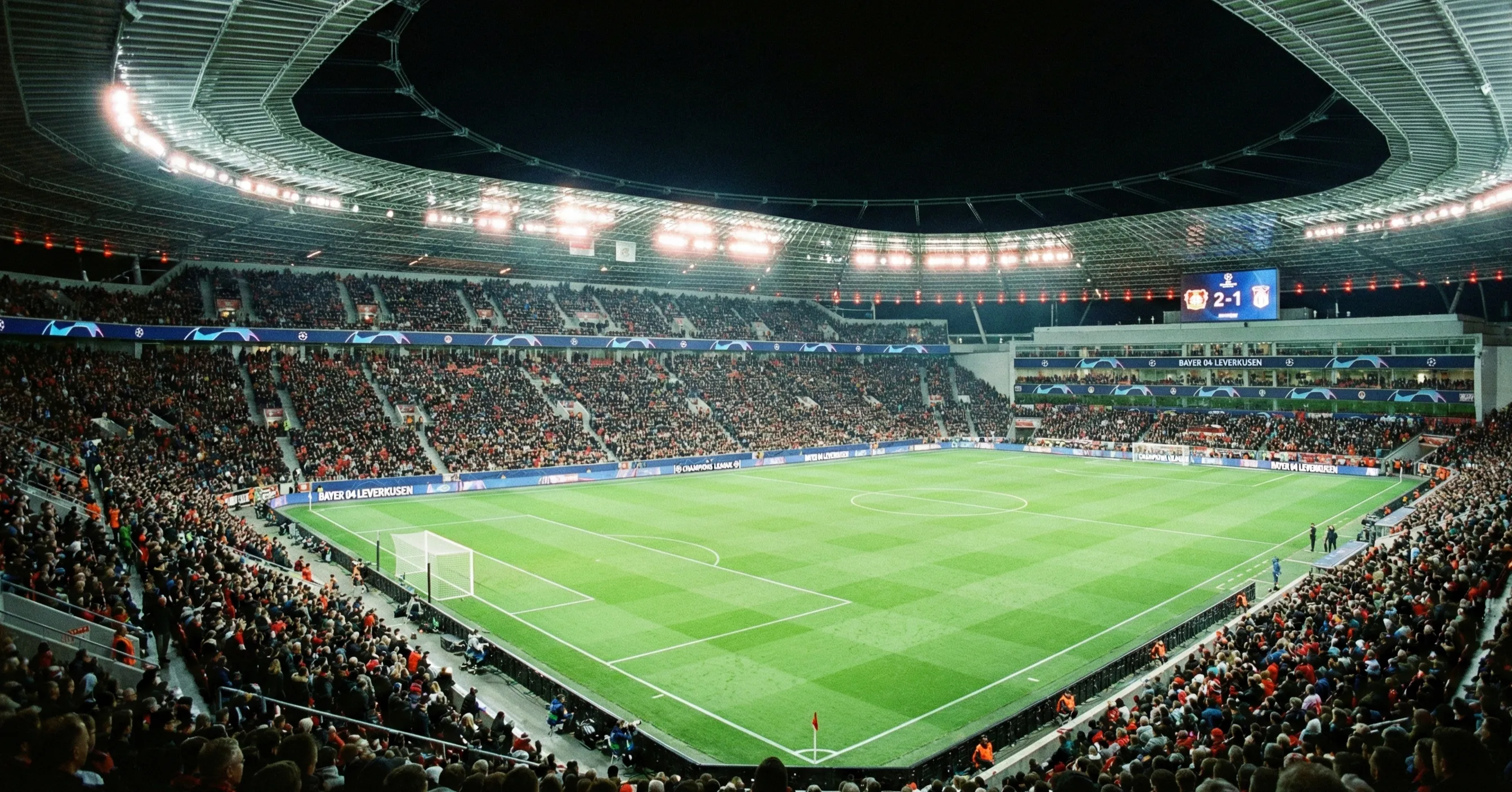
Leverkusen’s Champions League participation creates scheduling dynamics that affect Bundesliga performances in predictable ways. Unlike clubs with massive squad depth, Leverkusen’s quality concentration in their starting eleven means European fixtures genuinely impact domestic performances through fatigue, rotation requirements, and psychological factors.
The pattern historically involves elevated domestic performances before Champions League fixtures when players push for selection and intensity peaks, followed by decreased performances after European fixtures when accumulated fatigue combines with potential rotation. This creates a predictable calendar effect where betting markets sometimes misprice Leverkusen based on recent results without accounting for underlying schedule context.
Specifically, backing Leverkusen opponents at inflated underdog odds immediately following demanding European fixtures occasionally offers value. When Leverkusen travel to Milan on Tuesday and host Augsburg on Saturday, the domestic fixture carries genuine performance risk that odds don’t always reflect. The approach requires tracking Leverkusen’s specific European schedule rather than applying generic “post-European fixture” assumptions, since home European matches with quick recovery time affect performance differently than away fixtures requiring significant travel.
The reverse application involves backing Leverkusen at reduced odds when extended domestic-only stretches allow optimal preparation and recovery. Fresh legs, consistent training rhythms, and singular focus on Bundesliga fixtures produces peak performances that form-based analysis might undervalue if recent results included European-schedule-affected matches.
Key Player Dependencies and Injury Impacts
Leverkusen’s reliance on specific players exceeds what balanced squads experience, creating meaningful betting implications around injury news and availability announcements. When their primary creative threat or finishing specialist misses matches, Leverkusen’s attacking output decreases beyond what simple quality reduction suggests — it fundamentally changes how opponents defend them and what scorelines become probable.
Schick’s availability dramatically affects betting considerations in any season he remains at the club. His elite finishing converts opportunities that less clinical strikers would miss, and his positioning creates chances that different forward profiles couldn’t generate. When Schick plays, Leverkusen’s expected goals increase not just through his contributions but through defensive adjustments opponents make to account for his threat. When he’s absent, backing Leverkusen in attacking markets becomes substantially riskier regardless of replacement quality.
The same principle applies to creative midfielders who unlock Leverkusen’s attacking system. Players who provide final-third invention create the chance quality that Leverkusen’s system requires — without them, attacking play becomes predictable and easier to defend despite maintaining possession and territorial advantage. Monitoring Leverkusen team news before betting becomes essential rather than optional, as their attacking approach depends on specific players executing specific roles.
Defensive absences matter less for betting purposes because Leverkusen’s defensive vulnerabilities exist regardless of specific personnel. Removing a quality center-back certainly reduces defensive capability, but Leverkusen’s attacking commitment creates defensive gaps that even full-strength lineups struggle to eliminate. Offensive absences create larger probability shifts than defensive absences for betting purposes.
Spot unique penalty betting angles.
Situational Factors and Motivational Dynamics
Leverkusen’s historically inconsistent performances in high-pressure situations created their “Neverkusen” reputation — a tendency to falter when stakes maximized that persisted across multiple managerial regimes. The unbeaten championship season challenged this narrative dramatically, though whether that reflects fundamental transformation or statistical outlier remains debatable. Bettors must decide whether historical psychological patterns still apply or whether organizational change has genuinely eliminated previous tendencies.
The pragmatic approach involves treating big matches differently than routine fixtures without assuming specific directional bias. Leverkusen versus Bayern Munich or in derby situations against Köln produces match dynamics that differ from standard Bundesliga encounters, and betting markets sometimes misprice these fixtures by assuming normal performance expectations apply. Whether Leverkusen rise to occasions or shrink from them in any specific season, acknowledging that stakes affect performance helps avoid mispriced situations regardless of directional assumptions.
Late-season positioning creates additional motivational dynamics. Leverkusen fighting for Champions League qualification approaches matches differently than Leverkusen with secure positioning — the desperate intensity of must-win situations produces elevated performances that affect both result probabilities and goals expectations. Conversely, comfortable mid-table positioning with nothing at stake sometimes produces flat performances against opponents for whom matches carry meaningful implications.
Building Your Leverkusen Betting Strategy

Market selection determines profitability more than match selection when betting Leverkusen. Their attacking style and defensive vulnerabilities create consistent patterns that BTTS and goals markets exploit, while match-winner betting involves variance that single-market approaches struggle to accommodate. Focus on proposition markets that capitalize on Leverkusen’s structural characteristics rather than attempting to predict outcomes that their inconsistency makes inherently unpredictable.
Pre-match analysis for Leverkusen fixtures should include opponent evaluation beyond simple quality assessment. How does the opponent approach matches tactically? Will they attack Leverkusen’s defensive vulnerabilities or absorb pressure and counter? Answering these questions determines whether BTTS represents genuine value or whether alternative market selections make more sense. Additionally, check Leverkusen’s calendar for European fixtures, review injury reports for key attacking players, and assess motivational factors based on league positioning and stakes.
Staking discipline matters particularly for Leverkusen betting given elevated variance compared to betting more predictable outcomes. Reduced individual stakes across more selections produces better results than concentrated stakes on perceived certainties that Leverkusen’s inconsistency frequently undermines. The goal involves consistent application of edges rather than large bets on individual matches where confidence exceeds what evidence supports.
Track Leverkusen-specific performance across market types, opponent categories, and situational factors. Record which approaches produce positive ROI, whether schedule-based analysis actually predicts performance variations, and whether key player availability genuinely affects outcomes as theory suggests. This evidence-based refinement replaces assumption-driven betting with systematic improvement grounded in actual results from your specific approach.
Leverkusen’s transformation from perennial nearly-men to genuine champions creates fascinating betting dynamics as markets adjust to their evolved status. Whether that championship represents sustainable excellence or one-season variance that regression will correct remains football’s great uncertainty — but understanding their tactical approach, key dependencies, and situational factors positions you to profit regardless of where their trajectory leads. The edges exist in market selections that exploit consistent patterns, not in predicting outcomes that Leverkusen’s inherent volatility makes unpredictable.
Save gambling deposits easily through bundesliga bet.
