
Bundesliga Betting Strategy Guide: Building a Data-Driven Approach
Moving beyond beginner Bundesliga betting into advanced strategy territory requires shifting from intuitive guessing to systematic frameworks grounded in data and probability. I spent my early betting years making what felt like smart decisions—backing Bayern most weeks, avoiding draws because they seemed unpredictable, chasing big odds on accumulators—only to watch my bankroll slowly bleed despite feeling like I understood German football reasonably well. The problem wasn’t knowledge about teams or players; it was lacking analytical frameworks that consistently identify value where it actually exists.
Advanced Bundesliga betting strategy isn’t about predicting every outcome correctly—that’s impossible given football’s inherent variance. Instead, it’s about building processes that identify when bookmaker odds diverge from true probability frequently enough that small edges compound into meaningful profits over hundreds of bets. This requires understanding statistical concepts like expected goals, recognizing how Bundesliga’s unique characteristics create exploitable patterns, and developing discipline to bet only when genuine advantages exist rather than forcing action on every match.
The strategies outlined here assume you’ve moved past absolute beginner status. You understand basic betting markets, you’ve placed enough bets to recognize that short-term variance doesn’t invalidate sound analysis, and you’re ready to incorporate more sophisticated approaches than “back home teams” or “Bayern always wins.” These aren’t magic formulas guaranteeing profits—those don’t exist in competitive betting markets. They’re frameworks that tilt probability in your favor when applied consistently with proper bankroll management.
What separates profitable long-term Bundesliga bettors from perpetual losers isn’t some secret information unavailable to others. It’s systematic application of analytical principles that extract small edges repeatedly. A 53-55% win rate on even-money bets doesn’t sound impressive compared to claims you’ll see from scam tipsters promising 70-80% accuracy, but that modest edge compounds into substantial profits over time while the supposed experts’ mythical win rates never materialize in verifiable documented records.
The 2026/27 Bundesliga season presents typical opportunities for strategic betting. Bayern Munich’s odds reflect market uncertainty about whether their dominance has permanently eroded. Mid-table chaos continues as always, with teams ranked 6th-14th showing remarkable parity that creates profitable situations when bookmakers struggle assessing these evenly matched fixtures. Newly promoted Hamburg and Köln bring added unpredictability as the market calibrates to their top-flight quality. Throughout all of this, systematic strategy extracts value that casual analysis misses.
Learn more about us detailed.
Statistical Analysis Foundation for Bundesliga Betting
Advanced betting strategy starts with understanding which statistics actually predict outcomes versus those that merely describe what already happened. Plenty of numbers exist around German football—goals scored, possession percentages, shots on target, corners won—but not all carry equivalent predictive power for future matches.
Expected goals (xG) has emerged as the single most valuable predictive metric in modern football analytics, and we’ll explore it deeply in the next section. But beyond xG, several statistical approaches provide genuine edges when applied correctly to Bundesliga betting.
Form analysis with proper context
Everyone knows to check recent form, but sophisticated analysis goes several layers deeper. Don’t just count wins and losses from the last five matches—examine strength of schedule during that period. A team with five straight wins against bottom-five opposition tells you something fundamentally different than five victories over top-half sides. Context transforms raw results into meaningful predictive information.
I track rolling averages of performance metrics over different time windows: last 5 matches, last 10, and full season. Comparing these reveals whether recent form represents genuine quality shifts or statistical noise that’ll regress toward season-long baselines. When a mid-table team suddenly looks elite over their last five matches but season-long numbers suggest average quality, regression toward actual ability level awaits—valuable information when their odds have shortened based on recent results without accounting for unsustainability.
Home and away splits deserve separate analysis because aggregating them obscures crucial information. Dortmund’s overall record might look strong, but if they’ve won 80% at home while winning only 40% away, treating them identically regardless of venue costs money. Every Bundesliga club should have separate home and away profiles in your analytical framework because venue impact varies wildly across the league.
Defensive versus offensive metrics
Goals scored and conceded represent obvious starting points, but goals allowed per match tells you more about sustainable quality than total points accumulated. Teams can overperform underlying defensive metrics temporarily through goalkeeper heroics or opponent wastefulness, but eventually regression occurs. A side sitting 8th despite allowing 2.1 goals per match probably isn’t as good as their position suggests—their luck runs out eventually.
Conversely, teams with strong defensive metrics but middling league positions often represent value before results catch up to underlying quality. If Freiburg is in 12th but allows only 1.1 goals per match with solid xG against numbers, they’re probably better than their position indicates. Market odds haven’t adjusted yet, creating opportunities for those analyzing process over results.
Shot quality over shot quantity
Total shots taken or allowed matters less than where those shots originate. Teams allowing 15 shots per match sound defensively weak until you realize 12 come from outside the box—low-danger attempts unlikely to score. Shot location data reveals whether teams are genuinely vulnerable or just allowing opponent possession in non-threatening areas.
For Bundesliga betting, this particularly matters when assessing whether high-pressing teams will succeed against possession-based sides. High presses force turnovers in dangerous areas creating quality chances from fewer total shots. Possession teams generate more shots but often from lower-danger positions after building from the back. Understanding these tactical dynamics helps predict goals more accurately than raw shot statistics suggest.
Fixture congestion effects
Teams playing in European competition face matches every three days during group stages, creating fatigue that shows in Bundesliga performance. But the impact isn’t uniform—larger squads with quality depth rotate effectively and maintain performance levels, while thinner squads see noticeable drops in key player minutes and overall results.
I track upcoming fixture schedules specifically noting when teams face crucial European matches surrounding Bundesliga fixtures. Bayern with a Champions League quarterfinal three days after a Bundesliga match likely rotates their lineup or shows reduced intensity in the league game. Betting markets sometimes undervalue these fatigue effects because casual bettors focus on squad quality rather than actual expected lineup and effort levels.
Expected Goals (xG) as Betting Foundation
Expected goals revolutionized how serious football analysts evaluate team performance and predict future results. Understanding xG deeply—not just superficially—separates sophisticated bettors from those who merely heard the term but don’t grasp its implications for value identification.
What xG actually measures
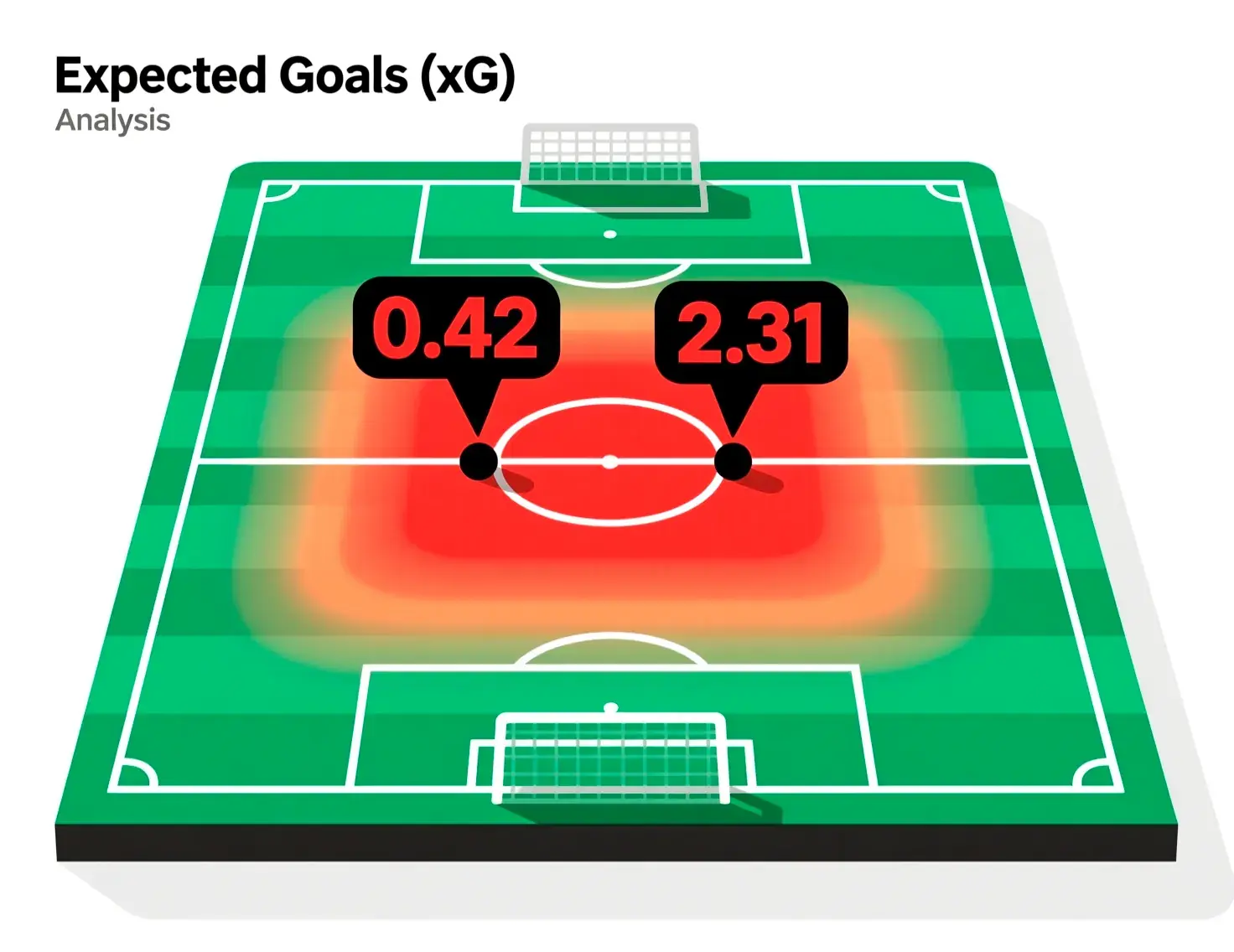
Expected goals assigns probability values to every shot based on historical data about similar attempts. A shot from six yards out with no defenders blocking converts roughly 35-40% of the time historically, so it receives an xG value around 0.35-0.40. A long-range effort from 25 yards with defenders present converts maybe 2-3% historically, receiving xG of 0.02-0.03.
The key insight: xG measures shot quality, not shot outcome. A striker missing a tap-in doesn’t change that shot’s 0.80 xG value—it was still a high-quality chance regardless of the miss. Over many shots, conversion rates regress toward xG values because individual finishing variance averages out. This predictive power makes xG invaluable for betting because it identifies teams creating better chances than their goal tallies suggest, or teams whose goal totals flatter underlying chance quality.
xG outperformance and regression
When teams score significantly more goals than their xG totals predict, two possibilities exist: exceptional finishing talent that sustainably converts chances at rates above league average, or fortunate variance that’ll regress toward expected rates. Distinguishing these requires examining multi-season data and individual player finishing histories.
Most xG overperformance stems from luck rather than skill. If Augsburg scores 35 goals from 25 xG, their finishing is running unsustainably hot. Betting against them in subsequent matches captures value because bookmaker odds price their recent goal totals rather than underlying chance creation quality that predicts future scoring better. When regression occurs—and it usually does—you’ve positioned on the right side.
The same principle applies defensively. Teams allowing fewer goals than xG against suggests goalkeeper overperformance or opponent underperformance in finishing. These defensive overperformances regress similarly to offensive ones. Backing opponents against teams with inflated defensive reputations built on unsustainable shot-stopping provides edges when odds haven’t adjusted to inevitable regression.
Applying xG to Bundesliga betting
I maintain spreadsheets tracking each Bundesliga team’s xG for and against throughout the season. Comparing actual goals to xG reveals overperformers and underperformers. Teams significantly outperforming xG become fade candidates because odds shorten based on results rather than process. Teams underperforming xG become backing candidates because odds lengthen despite underlying quality that should produce better future results.
This works particularly well mid-season when sample sizes grow large enough for xG’s predictive power to shine but small enough that recent variance still moves odds significantly. By matchday 15-20, you have enough matches for meaningful xG data while casual bettors and bookmakers still overweight recent results, creating value gaps your xG analysis exploits.
xG limitations and adjustments
Despite xG’s power, it has limitations requiring nuanced application. Basic xG models don’t account for shot context beyond location—they ignore defensive pressure, whether the shot came from open play or set pieces, or shooter quality. More sophisticated models incorporating these factors provide better predictions but aren’t always publicly available.
I adjust xG interpretations based on team characteristics. Clubs with elite strikers (Kane at Bayern historically) sustainably outperform xG because exceptional finishing is real skill, not just variance. Conversely, teams with below-average finishers underperform xG persistently—fade them even when underlying chance creation looks solid because goals ultimately require finishing.
Set piece specialists also skew xG analysis. Teams creating many dangerous free kicks or corners generate goals from situations standard xG models undervalue because they average across all teams rather than accounting for clubs with specific set piece expertise. When Union Berlin creates 60% of their xG from set pieces and has specialist delivery and aerial presence, they’ll likely outperform basic xG models that don’t capture this advantage.
Bundesliga-Specific Betting Angles
Every league has unique characteristics creating betting opportunities for those who understand them deeply. Bundesliga’s distinctive qualities—tactical philosophies, referee tendencies, scheduling quirks—produce patterns that sophisticated analysis exploits systematically.
Exploiting Bundesliga’s high-scoring tendencies
Bundesliga consistently produces more goals than other major European leagues. The 2024/25 season averaged 3.1 goals per match compared to 2.7 in the Premier League and 2.5 in Serie A. This isn’t random variance—it reflects tactical cultures and refereeing styles that emphasize attacking football and flowing games over defensive structure.
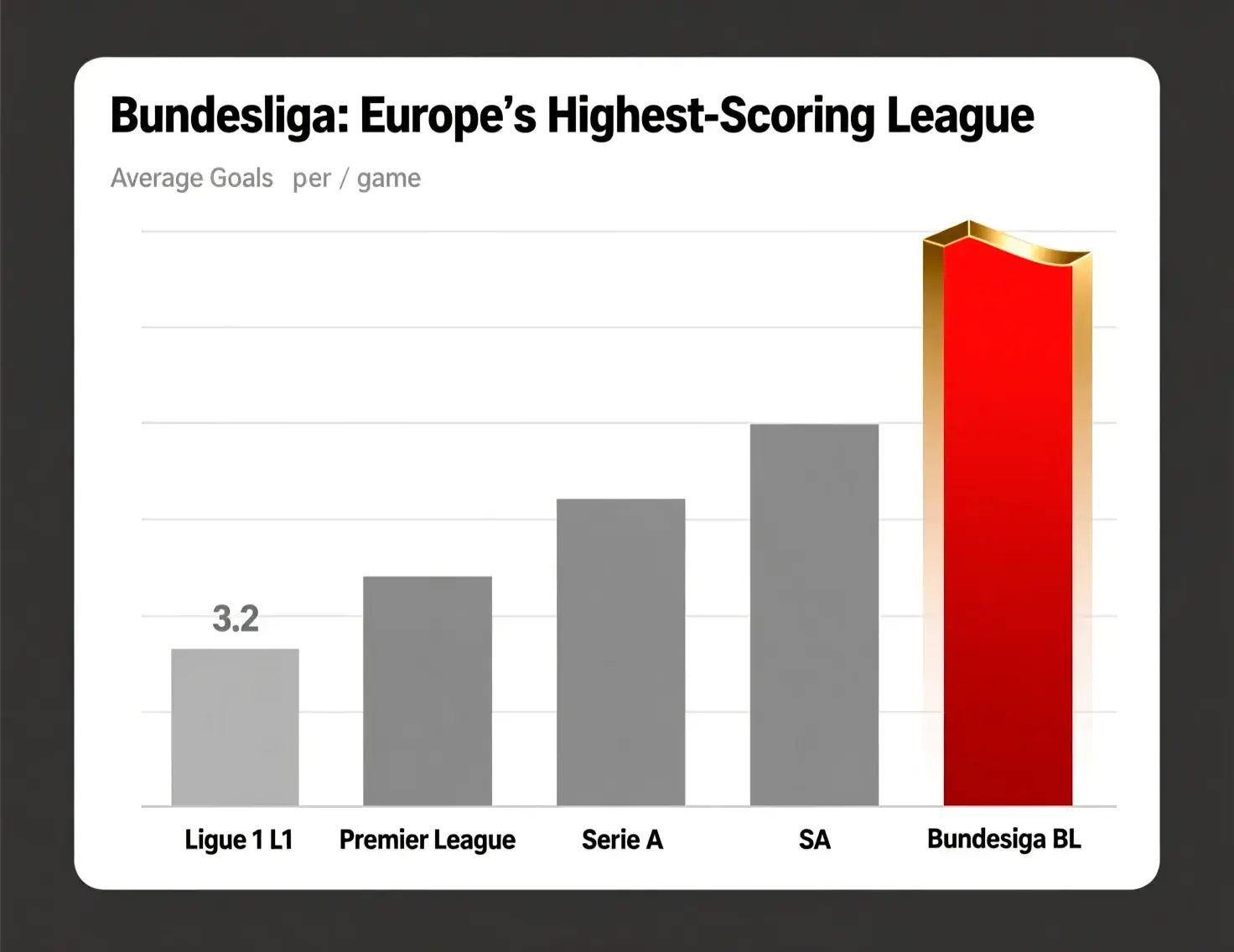
This creates systematic value in over 2.5 goals and BTTS markets because bookmakers set lines based partly on cross-league comparisons rather than fully adjusting for Bundesliga’s higher-scoring reality. When bookmakers price Bundesliga overs at the same margins they use for defensive Serie A matches, inefficiencies emerge that sharp bettors exploit.
I specifically target mid-table clashes between teams ranked 7th-14th for overs betting. These teams generally lack the defensive organization of top sides but possess enough attacking quality to score against each other. When Hoffenheim hosts Augsburg, both teams likely create chances leading to goals because neither emphasizes defensive solidity above all else. Bookmakers often underprice total goals in these fixtures relative to actual scoring probability.
Track individual team propensities carefully though—not every Bundesliga club fits the high-scoring mold. Freiburg under their current management emphasizes defensive structure and controlled possession, regularly playing 1-0 and 2-1 matches even in a high-scoring league. Blindly backing overs in all Bundesliga matches loses money because club-specific tactics matter more than league-wide trends when predicting specific fixture outcomes.
Home advantage variations by club
Home advantage exists across football, but its magnitude varies wildly by club in ways that create betting value when you quantify it properly. Some Bundesliga teams show massive home-away splits while others perform similarly regardless of venue. Understanding these variations helps price matches more accurately than bookmakers who often apply league-average home advantage to all teams.
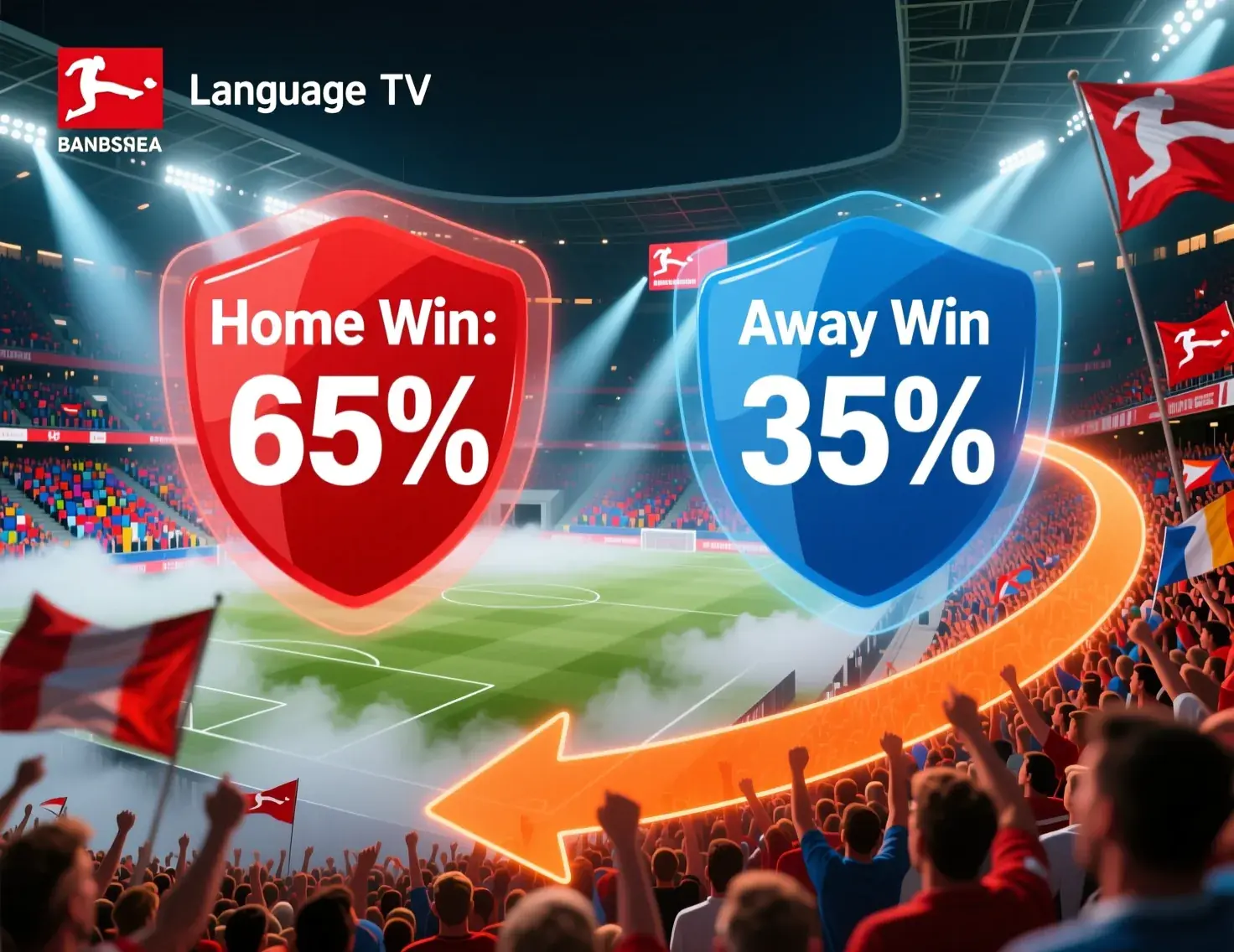
Dortmund’s home advantage at Signal Iduna Park represents one of Europe’s largest. Their famous “Yellow Wall” creates atmosphere genuinely impacting performance—Dortmund historically wins 75-80% of home matches while winning only 45-50% away. This 30+ percentage point gap should influence odds more than standard home advantage pricing suggests. When Dortmund hosts mid-table opposition, their actual winning probability exceeds what bookmaker odds imply because generic home advantage adjustments undervalue their specific venue impact.
Conversely, teams playing in smaller, newer stadiums without passionate fanbases show minimal home advantage. When RB Leipzig (less traditional fanbase, modern corporate club identity) plays at home versus away, performance differences nearly disappear. Bookmakers still shade odds toward Leipzig in home matches because that’s standard practice, but the actual probability shift doesn’t justify the odds movement—creating value on Leipzig’s opponents or draw options in their home matches.
I maintain detailed home-away records for each Bundesliga club updated after every matchday. This lets me identify when bookmaker odds apply generic home advantages to teams whose actual venue impact differs significantly from league averages. These spots generate consistent value because most bettors don’t quantify individual team home advantages precisely—they just assume home teams deserve shorter odds without calculating whether specific venue impacts justify those price movements.
Referee influence on match characteristics
Different referees influence match flow through card frequency, foul tolerance, and penalty awarding rates. Bundesliga’s referee pool shows measurable variation across these dimensions, creating opportunities when you know which official is appointed to specific matches.
Some referees call fouls tightly, averaging 25+ fouls per match and frequently issuing cards that disrupt rhythm and lead to cautious play. Others let matches flow with minimal interruption, calling only 15-18 fouls per match and rarely producing cards. These contrasting styles impact total goals—flowing matches with rhythm generally produce more scoring than frequently interrupted affairs where teams adjust tactics to avoid cards.
Track referee assignments when announced (usually 2-3 days before matches) and maintain statistics on each referee’s historical impact on goals, cards, and penalties. When a referee known for free-flowing matches officiates a fixture between attacking teams, it compounds high-scoring probability beyond what team-level analysis alone suggests. Conversely, strict referees overseeing historically aggressive teams often suppress goal totals below expected rates.
Late-season dynamics and motivations
Final matchdays in Bundesliga frequently involve significant stakes—relegation battles, European qualification races, and occasionally title implications. Teams’ motivations in these circumstances differ dramatically from typical mid-season fixtures, impacting how they approach matches tactically.
Clubs already secured in mid-table positions with nothing to play for often underperform expectations in late-season matches, particularly away from home. Their effort and intensity drops when matches are essentially meaningless to them, even if opponents face crucial stakes. This motivation differential creates value backing desperate teams against comfortable opponents because bookmakers don’t fully adjust for motivation imbalances that strongly influence performance.
Similarly, teams certain of relegation sometimes play their best football in final matches because pressure lifts and players perform freely knowing their fate is sealed. These condemned teams occasionally pull surprising results against opponents with everything still to play for because the psychological burden reverses—the “safe” team faces all the pressure while the relegated side plays without fear.
Post-Winter Break Betting Opportunities
Bundesliga’s extended winter break from mid-December through mid-January creates a unique inflection point where analytical frameworks require adjustment. This pause disrupts momentum, allows tactical evolution, and resets team trajectories in ways that generate betting value for those understanding break impacts systematically.

Understanding the winter break reset
Four weeks away from competitive football fundamentally alters team dynamics. Players rest and recover from accumulated fatigue—physical and mental—that builds during the intense first half of the season. Medical staffs address lingering injuries that players pushed through during packed fixture schedules. Coaching staffs reassess tactics and implement adjustments impossible during weekly match preparation cycles.
Teams return from the break with varying fitness levels depending on their training approaches during the pause. New signings integrated during the January transfer window take time adapting to systems and teammates. Tactical adjustments implemented during the break sometimes represent major philosophical shifts requiring several matches to execute properly. Injuries healing during the extended rest can transform team quality overnight.
Historical data shows the first 2-3 matchdays after winter break produce more upsets and unexpected results than typical Bundesliga weeks. Pre-break form becomes less predictive temporarily because so much changes during the pause. This uncertainty creates opportunities because bookmakers struggle pricing matches when normal analytical frameworks lose reliability.
Identifying post-break improvers
Certain team profiles consistently show stronger performance after winter break. Clubs with thin squads that accumulated fatigue pre-break benefit enormously from extended rest, returning fresher while quality-depth teams that handled fixture congestion well see less relative improvement. Teams that made significant January signings addressing weak positions show immediate upgrades that market odds haven’t fully priced yet.
I particularly target teams that struggled pre-break due to injury crises but return with key players healthy. When Dortmund enters the break without three starting defenders but all three return fit in January, their quality level transforms dramatically. Betting markets slowly adjust to this improved quality over several matches rather than immediately, creating value windows before odds fully reflect the healthier squad.
Fading pre-break overperformers
Conversely, teams that overperformed pre-break often regress after the pause. The break interrupts momentum and positive psychological spirals that sometimes sustain unsustainable runs. If Freiburg entered winter break on a seven-match unbeaten streak despite underlying metrics suggesting they got fortunate repeatedly, the pause often resets everything—allowing regression toward actual quality to manifest in results.
This represents a specific application of the broader regression principle: extended pauses accelerate regression toward true quality by breaking momentum and forcing fresh starts. Teams riding hot streaks built on unsustainable variance find that magic evaporates during the break, returning to earth in January.
Tactical evolution opportunities
Winter break gives managers time implementing new systems impossible to practice thoroughly during packed fixture schedules. Teams hiring new managers in November or December use the break integrating those managers’ philosophies fully. These tactical shifts create uncertainty about how teams will actually play post-break, and that uncertainty occasionally presents value when bookmakers extrapolate pre-break approaches that no longer apply.
Track managerial and coaching staff changes during the break. When Wolfsburg hires a manager known for high-pressing possession football to replace one who employed defensive counter-attacking, their post-break matches likely show different characteristics than pre-break form suggests. Early bets on matches involving tactically evolved teams can capture value before market consensus forms about their new identity.
Advanced Accumulator Construction Strategy
Accumulator betting typically represents bookmaker profit centers where recreational bettors build random parlays chasing big odds. But structured accumulator approaches using correlated selections and proper probability analysis can identify positive expected value opportunities when most people’s accumulators lose systematically.
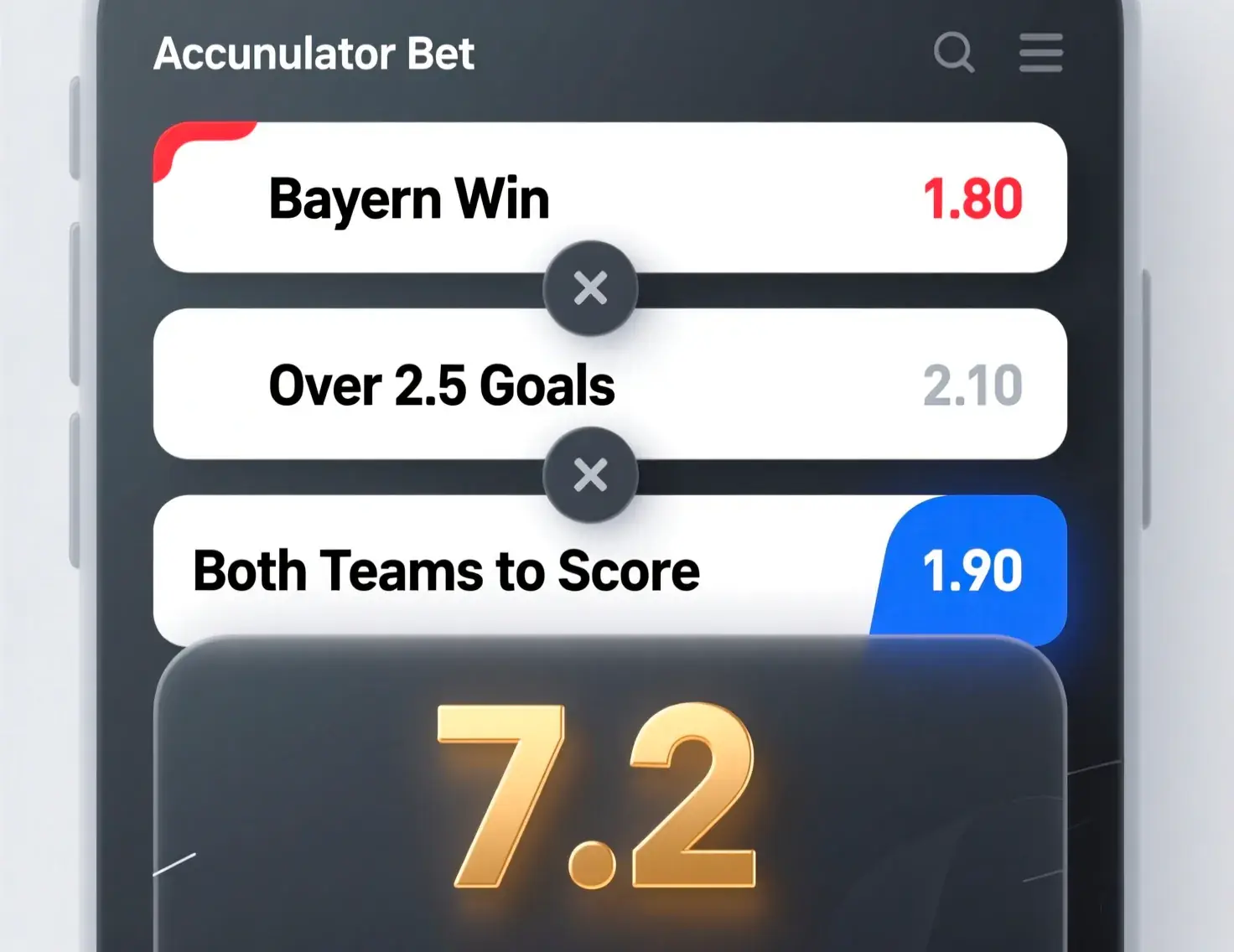
Correlated versus independent selections
Standard accumulator probability assumes independent outcomes—Bayern winning and Dortmund winning are separate events with probabilities that multiply. But some selections correlate positively, meaning one occurring makes the other more likely. Constructing accumulators around correlated outcomes where bookmakers price them as independent creates edge.
For example, combining “Bayern win” with “over 2.5 goals” shows positive correlation. If Bayern is winning, the match likely features goals—either Bayern scoring multiple times or the opponent also scoring while chasing the match. This correlation means the combined probability exceeds what you’d calculate by simply multiplying independent probabilities.
Similarly, BTTS correlates with over 2.5 goals. If both teams are scoring, high totals become more probable. Building three-leg accumulators using BTTS from matches you’ve identified as particularly likely to see both teams score creates realistic 5/1 or 6/1 odds with success rates that make the bets profitable long-term if your analysis proves accurate.
Sample size and variance management
Accumulators increase variance substantially because all legs must win. A three-leg accumulator where each leg has 65% probability hits only 27.5% of the time (0.65 x 0.65 x 0.65). This high variance means you need large sample sizes to distinguish lucky runs from genuine edge. Don’t evaluate accumulator strategy success over 10 or 20 bets—you need 100+ to see whether your approach actually works or you just got fortunate temporarily.
Manage stake sizes accordingly. If your standard bet is 2% of bankroll, reduce accumulator stakes to 0.5-1% because the higher variance means larger swings. This protects your bankroll during inevitable extended losing runs that accumulators produce even when your long-term edge is positive.
When to avoid accumulators
Despite structured approaches improving accumulator viability, many situations call for single bets rather than parlays. When you’ve identified genuine value on a specific selection—say Bayern at odds suggesting 70% probability when you calculate 75%—why dilute that edge by combining it with other selections that might not offer equivalent value?
Accumulators make sense when you’ve identified multiple modest edges that individually don’t justify maximum stake confidence but combined create attractive risk-reward profiles. If you have three selections each showing small edges, combining them into an accumulator with inflated odds due to multiplication can make sense. But forcing accumulators when you only have one strong selection costs you potential profit from that legitimate edge.
Bundesliga Betting Strategy: How to Apply Advanced Tactics Effectively
Advanced Bundesliga betting strategy builds on foundations of statistical analysis, expected goals understanding, exploitation of league-specific characteristics, and sophisticated bankroll management. The frameworks outlined here—xG integration, high-scoring market exploitation, club-specific home advantage quantification, post-winter break angles, and structured accumulator construction—provide systematic approaches to identifying value where casual analysis misses it entirely.
Remember that edge in competitive betting markets comes from small systematic advantages compounded over large sample sizes. You won’t win 70% of bets or double your bankroll monthly like scam tipsters claim. Realistic targets are 53-55% accuracy on even-money bets or identifying value frequently enough that positive expected value betting produces 5-10% returns on total stakes annually. That sounds modest but compounds into substantial profits over years of disciplined application.
Take fewer risky bets using bundesliga bet.
